You're about to leave thePowerLeaf educational environment.

You are about to enter the website of a licensed cannabis retailer. Product availability, pricing, ordering, fulfillment, and compliance are managed entirely by the retailer, not by PowerLeaf.

Choose a Participating Retailer

Each retailer is independently owned and operated. Selecting one takes you to their separate commercial website.

Mother Earth Wellness

Pawtucket, Rhode Island

Independently owned and operated

More partners coming soon

Additional licensed retailers using PowerLeaf

This list grows as new partners join

Continue

PowerLeaf does not sell cannabis, make product recommendations, provide medical advice, or endorse products for therapeutic effects.
Cannabis is not approved by the FDA for the treatment, cure, or prevention of any disease. Information here is for educational purposes only. PowerLeaf.com is aneducational websitethat helps consumers understand cannabis ingredients and reported experience categories.

Go Back

Go Back

You're about to leave thePowerLeaf educational environment.

You are about to enter the website of a licensed cannabis retailer. Product availability, pricing, ordering, fulfillment, and compliance are managed entirely by the retailer, not by PowerLeaf.

Choose a Participating Retailer

Each retailer is independently owned and operated. Selecting one takes you to their separate commercial website.

Mother Earth Wellness

Pawtucket, Rhode Island

Independently owned and operated

More partners coming soon

Additional licensed retailers using PowerLeaf

This list grows as new partners join

PowerLeaf.com is an educational website that helps consumers understand cannabis ingredients and reported experience categories. PowerLeaf does not sell cannabis, make product recommendations, provide medical advice, or endorse products for therapeutic effects.Cannabis is not approved by the FDA for the treatment, cure, or prevention of any disease. Information here is for educational purposes only.

Cannabis, Explained Through Science

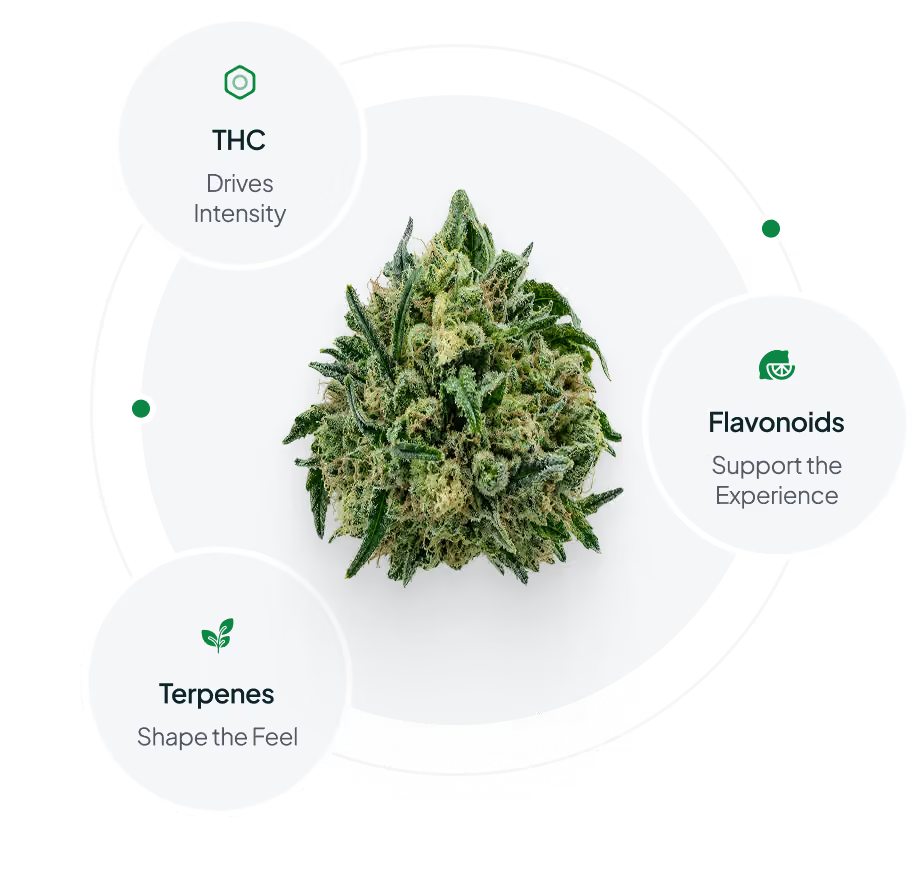
Cannabis is more than just THC.

It’s a complex plant made up of hundreds of ingredients that are processed by the body in dynamic ways. This page explores what current science suggests about how cannabis works — from plant chemistry to perception

Where Cannabis
Chemistry Begins

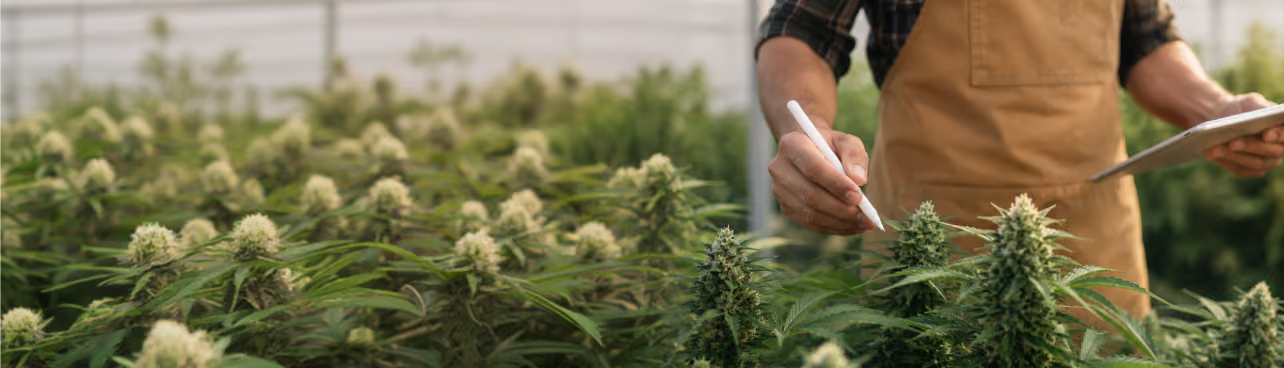
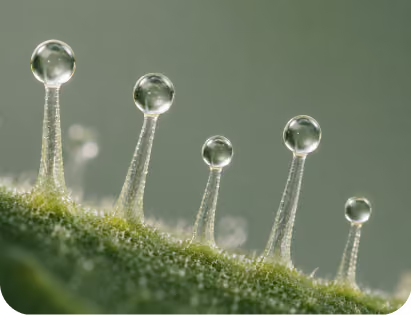
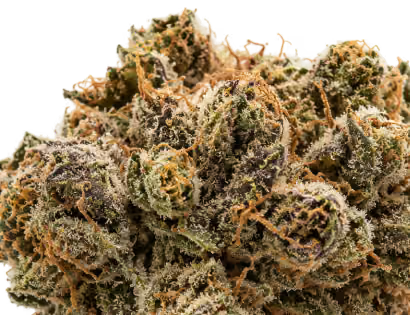
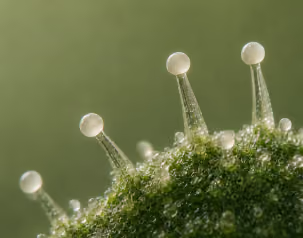
Cannabis chemistry starts at the plant level. Tiny glandular structures called trichomes produce and store cannabinoids, terpenes, and other compounds.
Genetics define the plant’s potential, while the growing environment shapes how that potential is expressed.

Plant Chemistry

Trichomes & Flower

Cannabinoids, terpenes, and other key compounds begin forming inside tiny glandular structures on the cannabis flower.

Inside the Flower

Where compounds are stored

During the flowering phase, trichomes act as tiny reservoirs for cannabinoids, terpenes, and other plant compounds.

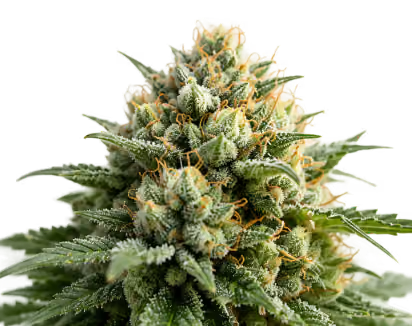
Trichomes can reveal a lot about flower quality.

Plant Profile

Genetics + Environment

Genetics define what a plant can produce. Light, water, nutrients, temperature, and soil shape how that profile develops.

Light

Water

Nutrients

Temperature

Soil & Medium

Slide Left
Slide Right

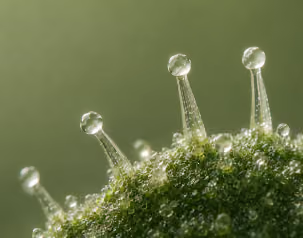
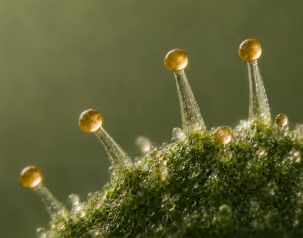
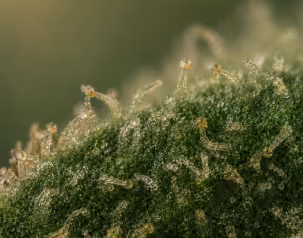
How to Read Trichomes

The color and condition of trichomes can provide important clues about the maturity and quality of the flower.

Pre-mature

Early Harvest

Clear trichomes

Often indicate underdeveloped flower with lower active compound maturity.

Aged

Past Peak

Amber or brown trichomes

Can indicate oxidation, weaker aroma, and reduced freshness.

Damaged

Poor Handling

Broken or leaking trichomes

Often caused by poor handling, crushing, or loss of resin heads.

Ripe

Optimal

Milky trichomes

Usually indicate better maturity, potency, and a more robust flower experience.

It’s Not Just THC. 


It’s Full Spectrum Chemistry.

Different forms. Different pathways. Different results.

THC is the most recognized compound in cannabis, but research suggests that it’s only part of the bigger picture of how a cannabis product is experienced by the consumer.

Cannabis contains a wide variety of ingredient compounds that are produced in variable amounts by the plant, and different ingredient profiles come from differences in both strain genetics and the specific environmental conditions under which the plant was grown.  Science suggests that these different types of compounds may all play a role in how products are experienced.

The Chemical Landscape of Cannabis

Cannabinoids
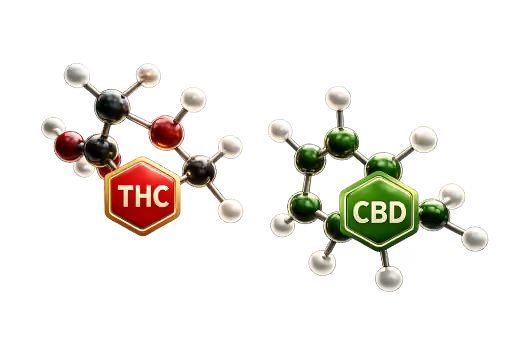
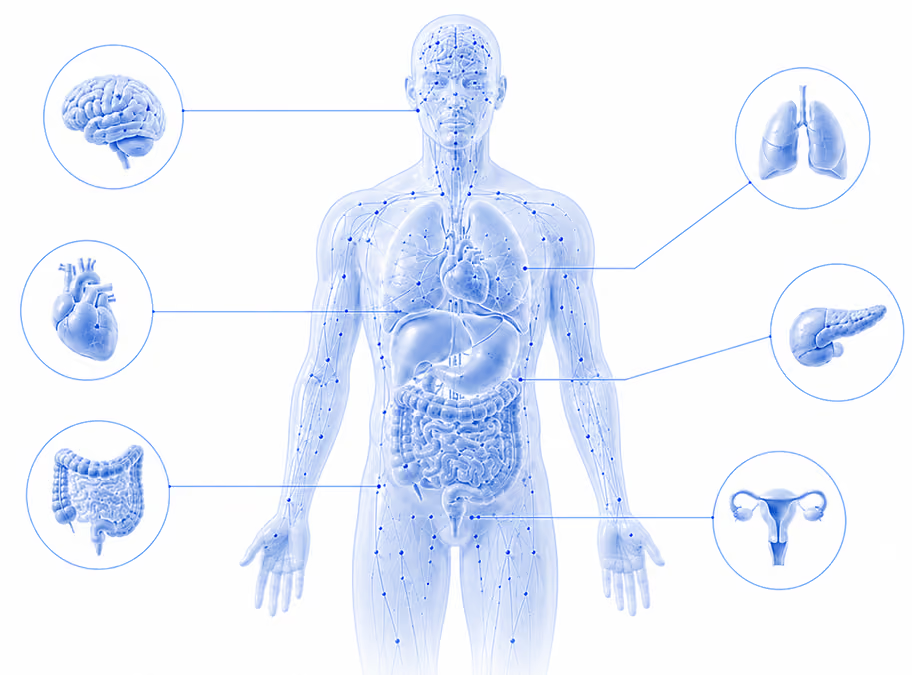
Cannabinoids are a group of compounds that interact with the body’s endocannabinoid system — a signaling network involved in regulating processes such as mood, perception, and sensory awareness.

THC and CBD are the most widely studied, but many others are being explored for their potential roles in shaping how cannabis is experienced.
Learn More
Terpenes
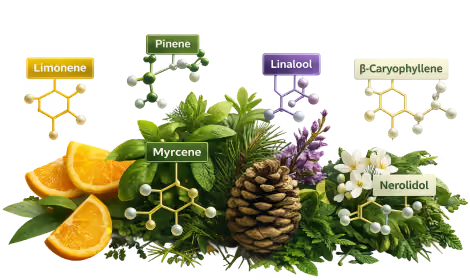
Terpenes are aromatic compounds found in many plants, including cannabis. They are responsible for characteristic scents like citrus, pine, or floral notes.

Beyond aroma, terpenes are being studied for how they may interact with sensory and neurological pathways, potentially contributing to differences in how products are perceived.
Learn More
Flavonoids
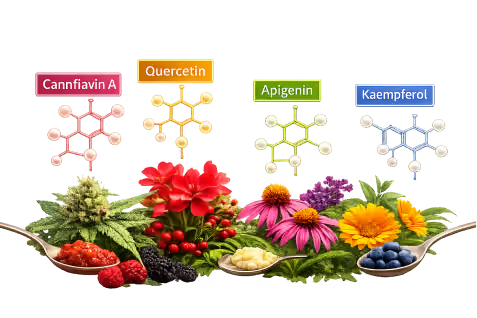
Flavonoids are natural plant compounds that contribute to color, flavor, and overall plant chemistry. They are found throughout nature in foods like fruits, vegetables, and tea, as well as in cannabis.

Research is ongoing to understand how flavonoids interact with biological systems and whether they play a role in shaping the broader cannabis experience.
Learn More

Major Cannabinoids &

Their Studied Effects

Psychoactivity 

THC

Evidence Strength

THC activates CB1 receptors in the brain, which is associated with changes in perception, mood, and sensory awareness. 

CBD

Evidence Strength

CBD does not directly activate CB1 receptors in the same way as THC and is not associated with intoxicating effects. 

This summary table reflects findings from human studies and preclinical research. Some effects are well characterized, while others remain under active investigation.

Emerging / preclinical evidence
Moderate / mixed human evidence
Stronger human evidence

Responses to cannabinoids can vary based on: dose and formulation, route of administration, frequency of use, individual biology and co-medications.

Psychoactivity 

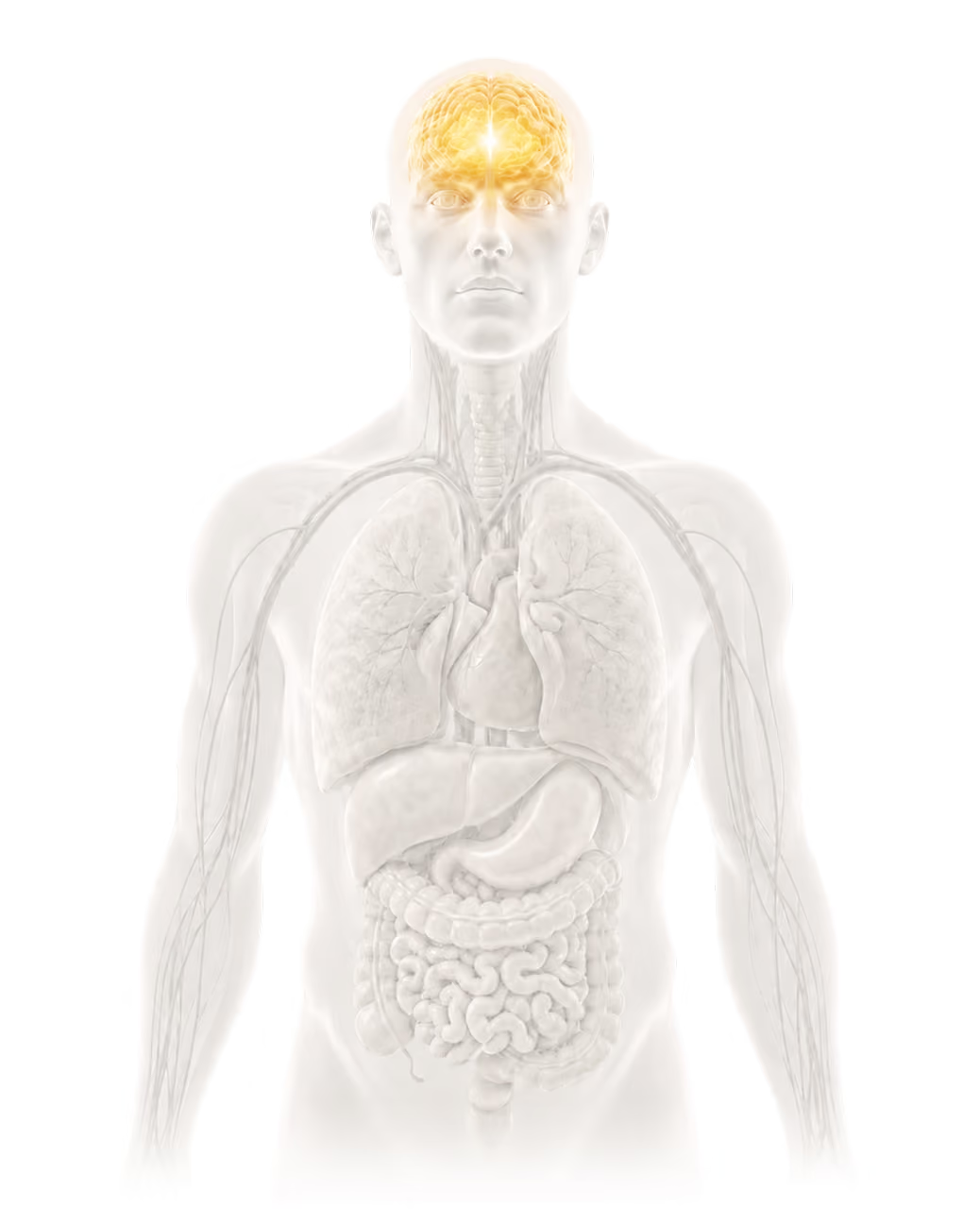
Brain & Perception 

THC

Evidence Strength

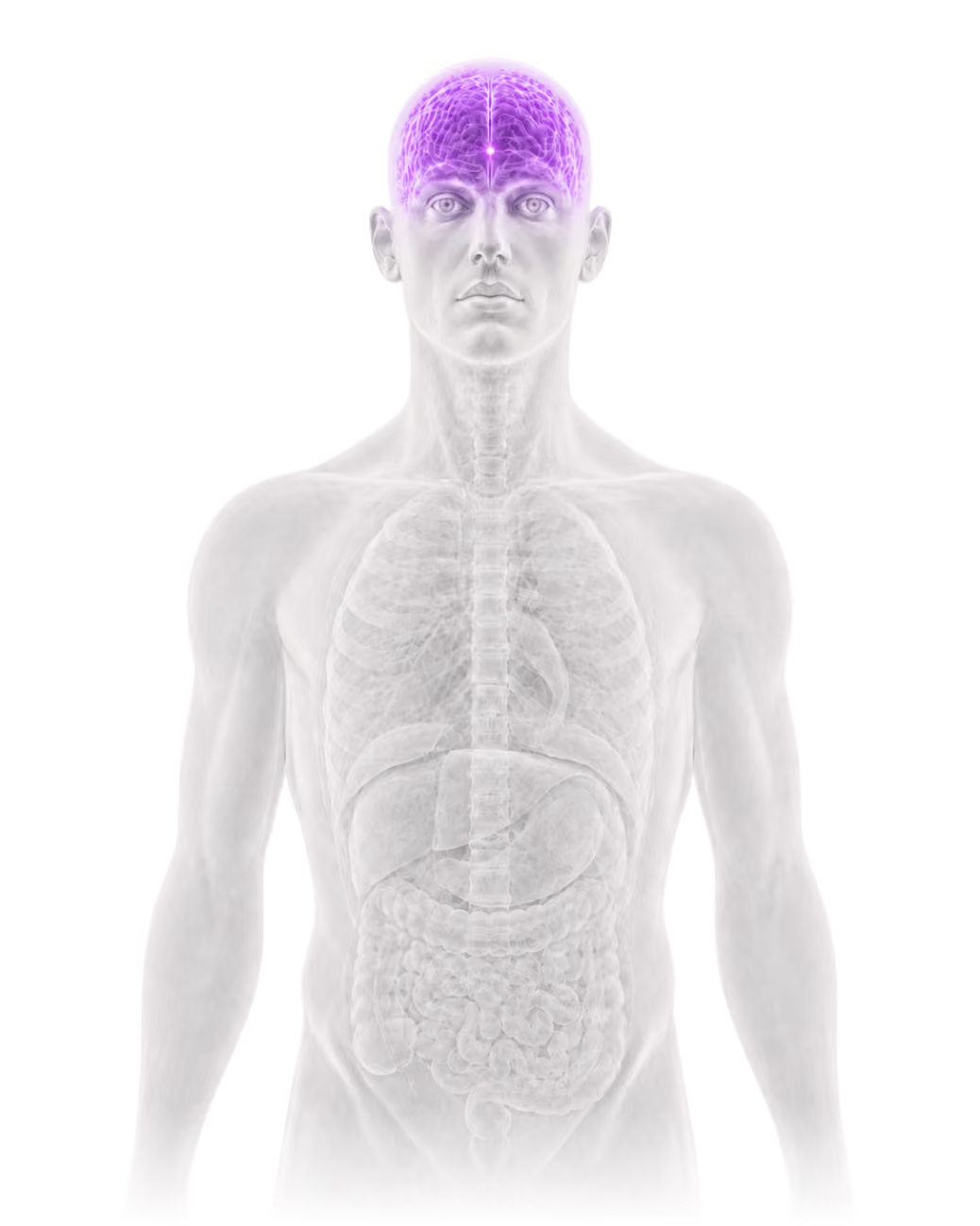
THC influences brain regions involved in memory, attention, and sensory processing, which may alter perception and cognitive performance.

CBD

Evidence Strength

CBD is being studied for its interaction with neural signaling pathways involved in mood and stress response, though effects can vary.

This summary table reflects findings from human studies and preclinical research. Some effects are well characterized, while others remain under active investigation.

Emerging / preclinical evidence
Moderate / mixed human evidence
Stronger human evidence

Responses to cannabinoids can vary based on: dose and formulation, route of administration, frequency of use, individual biology and co-medications.

Brain & Perception 

Nervous System 

THC

Evidence Strength

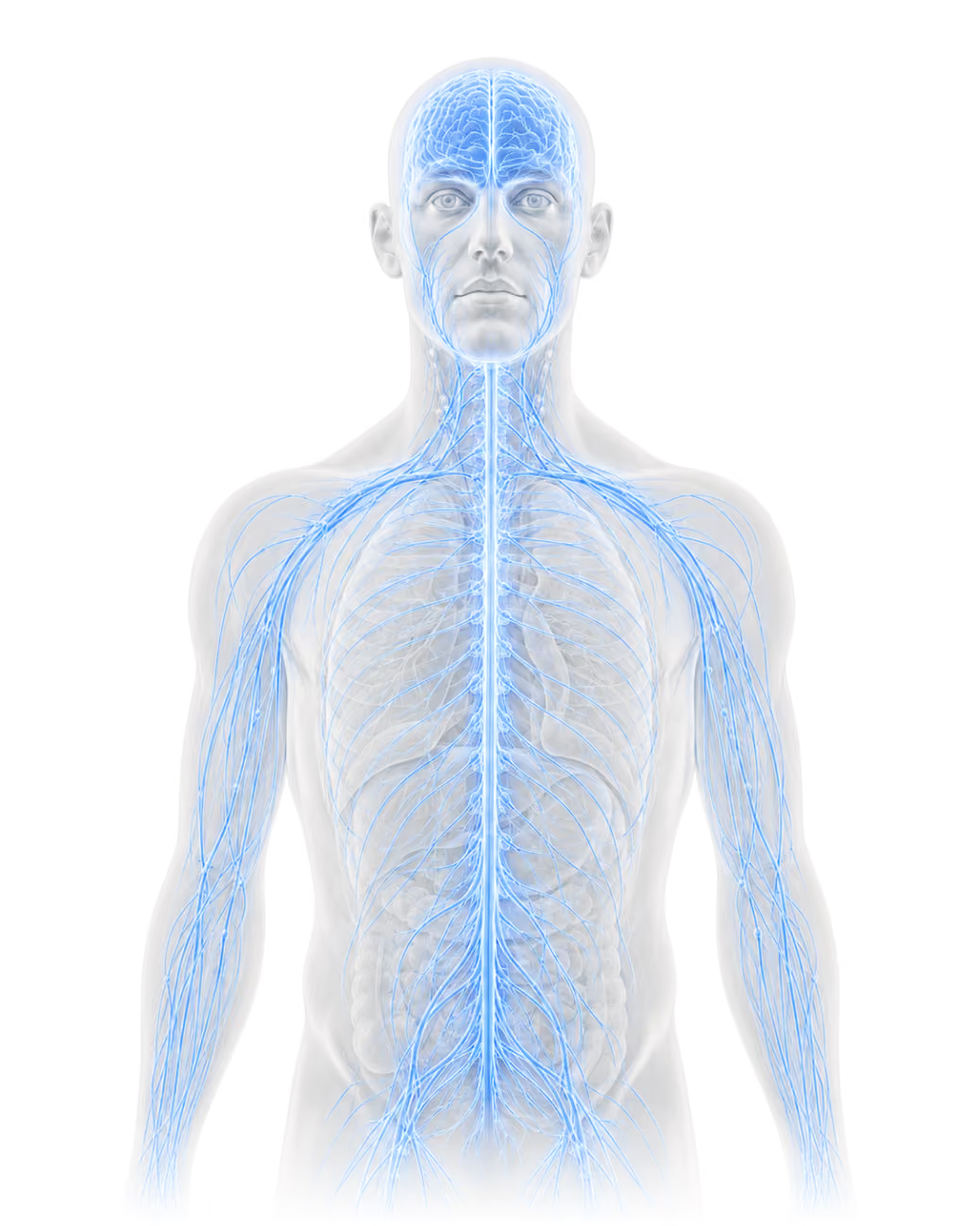
THC affects central nervous system signaling, including pathways involved in pain perception, coordination, and sensory input.

CBD

Evidence Strength

CBD has been studied for its effects on neuronal excitability and inflammation, with the strongest clinical evidence in certain seizure conditions.

This summary table reflects findings from human studies and preclinical research. Some effects are well characterized, while others remain under active investigation.

Emerging / preclinical evidence
Moderate / mixed human evidence
Stronger human evidence

Responses to cannabinoids can vary based on: dose and formulation, route of administration, frequency of use, individual biology and co-medications.

Nervous System 

Immune System

THC

Evidence Strength

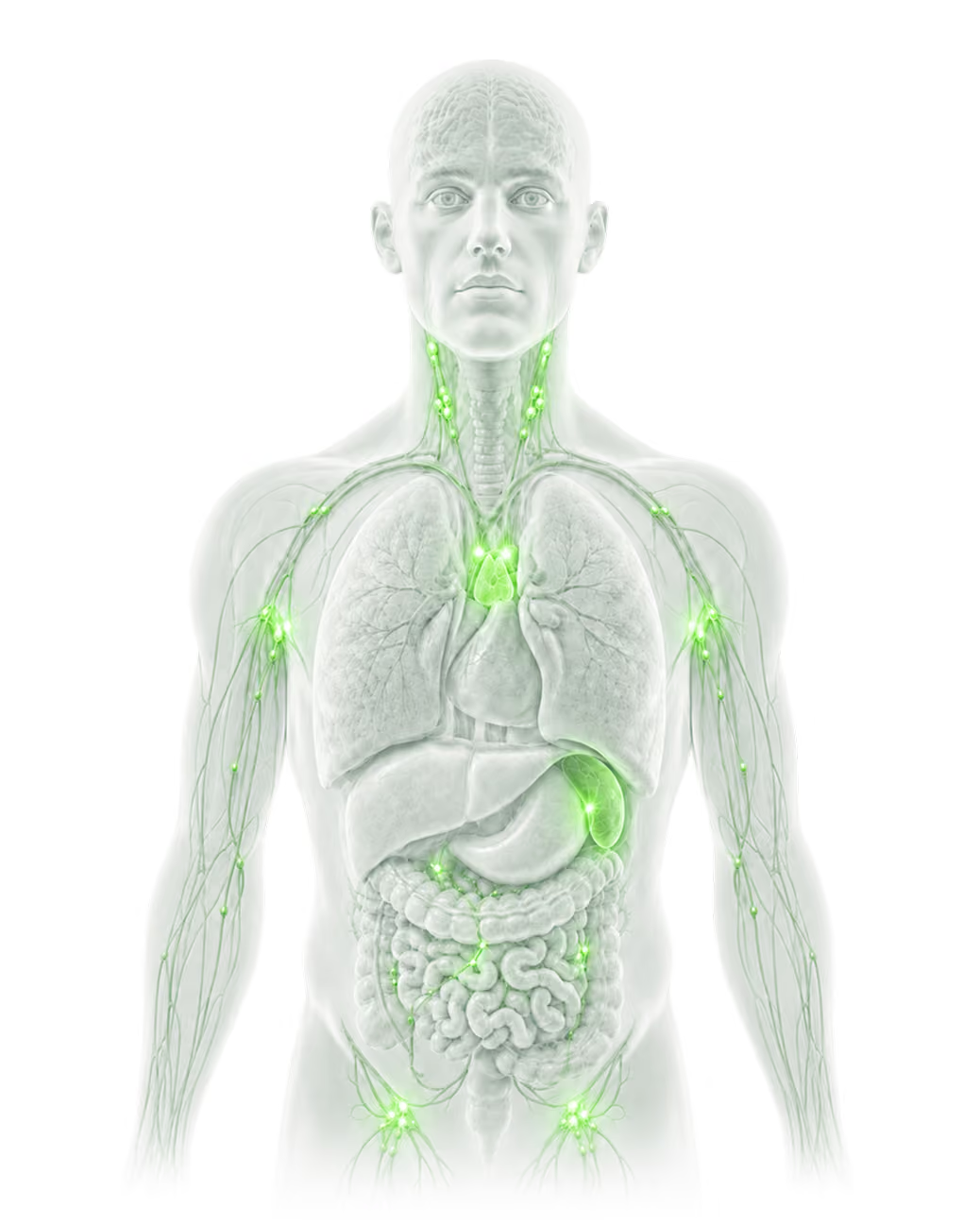
THC interacts with cannabinoid receptors involved in immune signaling, which may influence inflammatory responses depending on context.

CBD

Evidence Strength

CBD is being studied for anti-inflammatory and immunomodulatory activity, primarily in laboratory and early clinical research settings.

This summary table reflects findings from human studies and preclinical research. Some effects are well characterized, while others remain under active investigation.

Emerging / preclinical evidence
Moderate / mixed human evidence
Stronger human evidence

Responses to cannabinoids can vary based on: dose and formulation, route of administration, frequency of use, individual biology and co-medications.

Immune System

Digestive Tract

THC

Evidence Strength

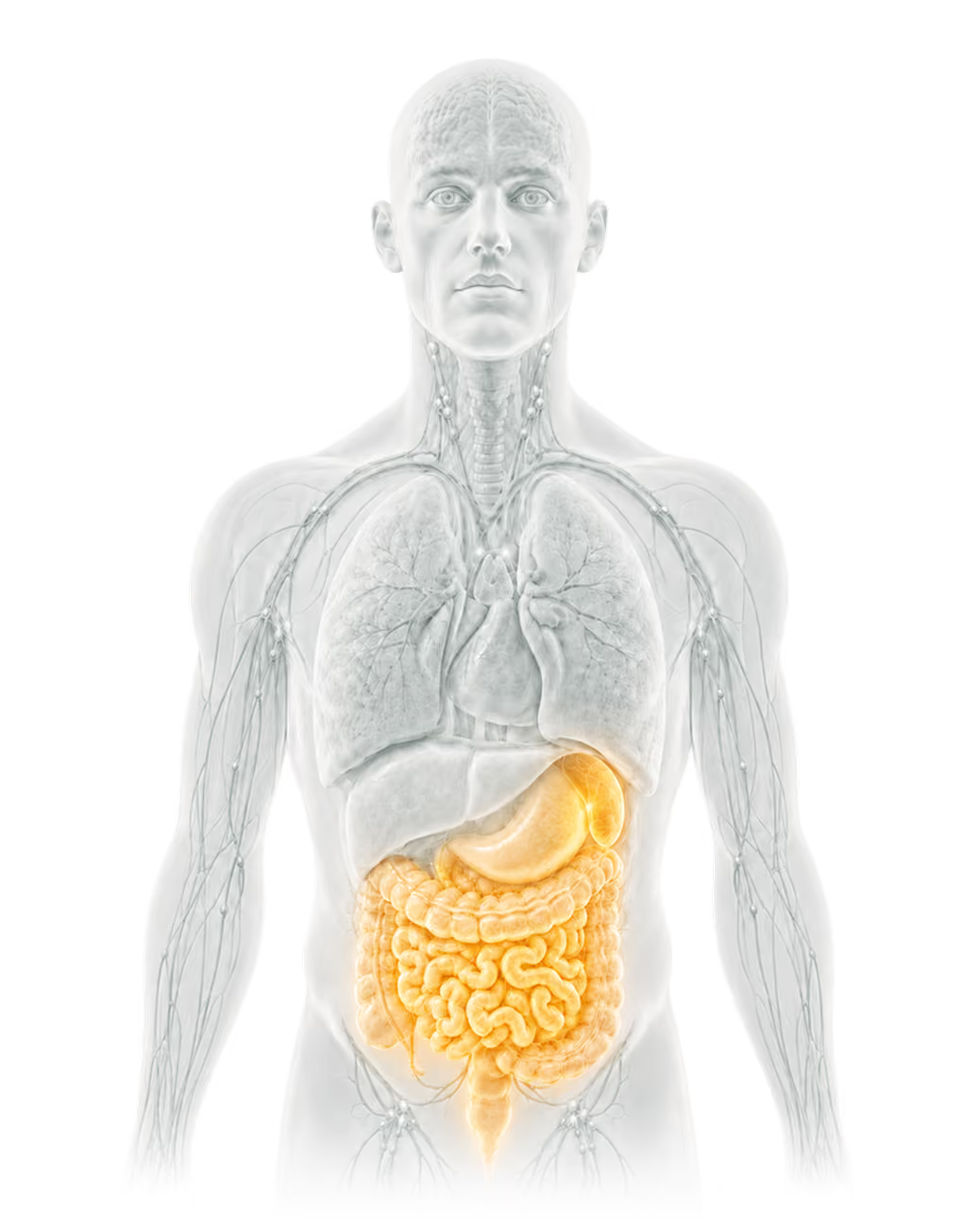
THC interacts with receptors in the gut that influence appetite, nausea signaling, and gastrointestinal motility.

CBD

Evidence Strength

CBD is being studied for its effects on gut inflammation and barrier function, though human evidence remains limited.

This summary table reflects findings from human studies and preclinical research. Some effects are well characterized, while others remain under active investigation.

Emerging / preclinical evidence
Moderate / mixed human evidence
Stronger human evidence

Responses to cannabinoids can vary based on: dose and formulation, route of administration, frequency of use, individual biology and co-medications.

Digestive Tract

Musculoskeletal System 

THC

Evidence Strength

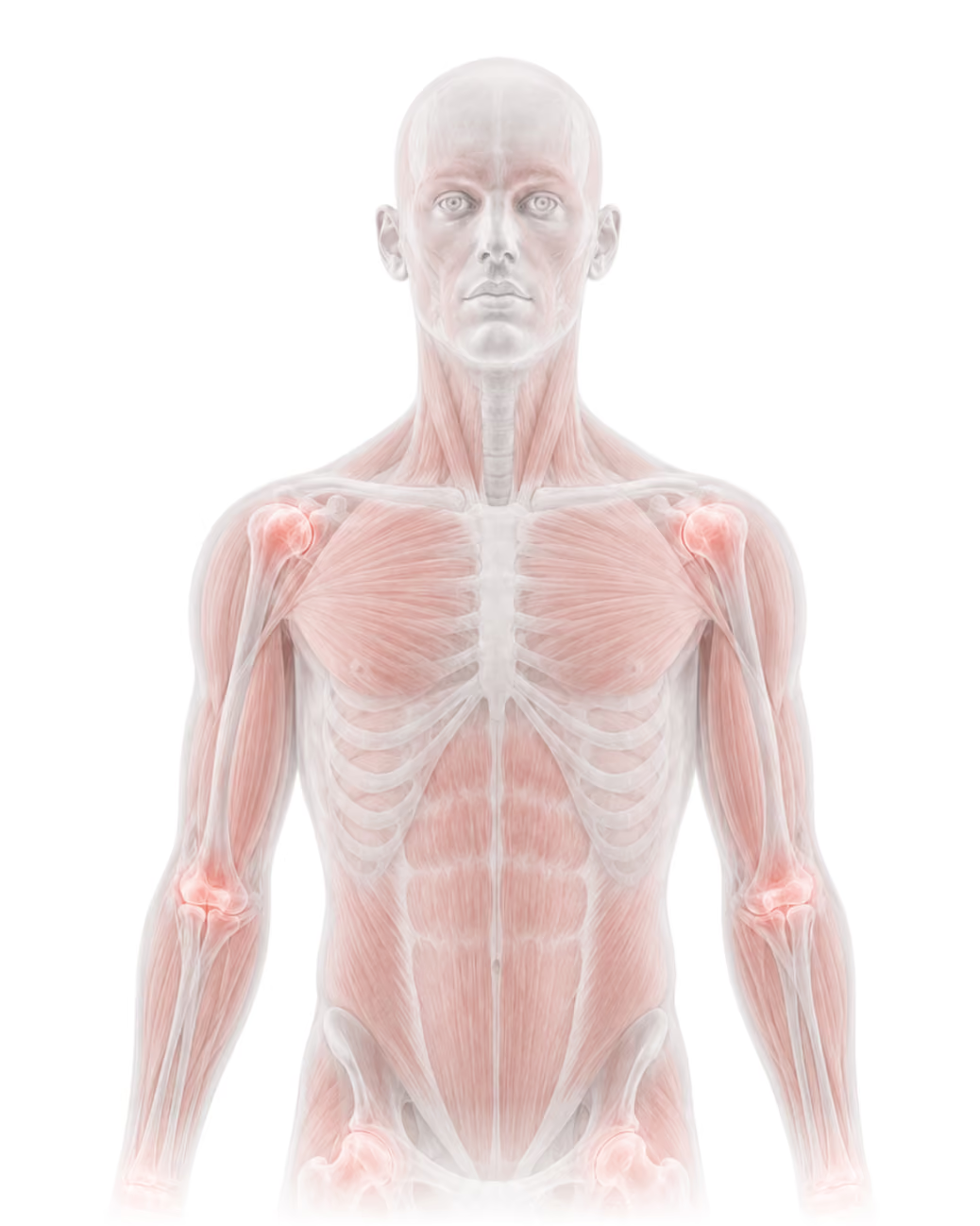
THC influences central pain signaling and muscle tone, which may affect how physical discomfort or tension is perceived.

CBD

Evidence Strength

CBD is being studied for anti-inflammatory and analgesic mechanisms that may relate to musculoskeletal function.

This summary table reflects findings from human studies and preclinical research. Some effects are well characterized, while others remain under active investigation.

Emerging / preclinical evidence
Moderate / mixed human evidence
Stronger human evidence

Responses to cannabinoids can vary based on: dose and formulation, route of administration, frequency of use, individual biology and co-medications.

Musculoskeletal System 

Cardiovascular System 

THC

Evidence Strength

THC can acutely increase heart rate and influence vascular tone, with effects that vary based on dose and individual physiology.

CBD

Evidence Strength

CBD is being studied for its effects on vascular function and blood pressure regulation, though clinical outcomes are still being evaluated.

This summary table reflects findings from human studies and preclinical research. Some effects are well characterized, while others remain under active investigation.

Emerging / preclinical evidence
Moderate / mixed human evidence
Stronger human evidence

Responses to cannabinoids can vary based on: dose and formulation, route of administration, frequency of use, individual biology and co-medications.

Cardiovascular System 

Endocrine System 

THC

Evidence Strength

THC interacts with signaling pathways that influence hormone regulation, including stress and reproductive hormone systems.

CBD

Evidence Strength

CBD may influence hormonal and metabolic signaling pathways, but these effects are not yet well defined in human studies.

This summary table reflects findings from human studies and preclinical research. Some effects are well characterized, while others remain under active investigation.

Emerging / preclinical evidence
Moderate / mixed human evidence
Stronger human evidence

Responses to cannabinoids can vary based on: dose and formulation, route of administration, frequency of use, individual biology and co-medications.

Endocrine System 

Reproductive System 

THC

Evidence Strength

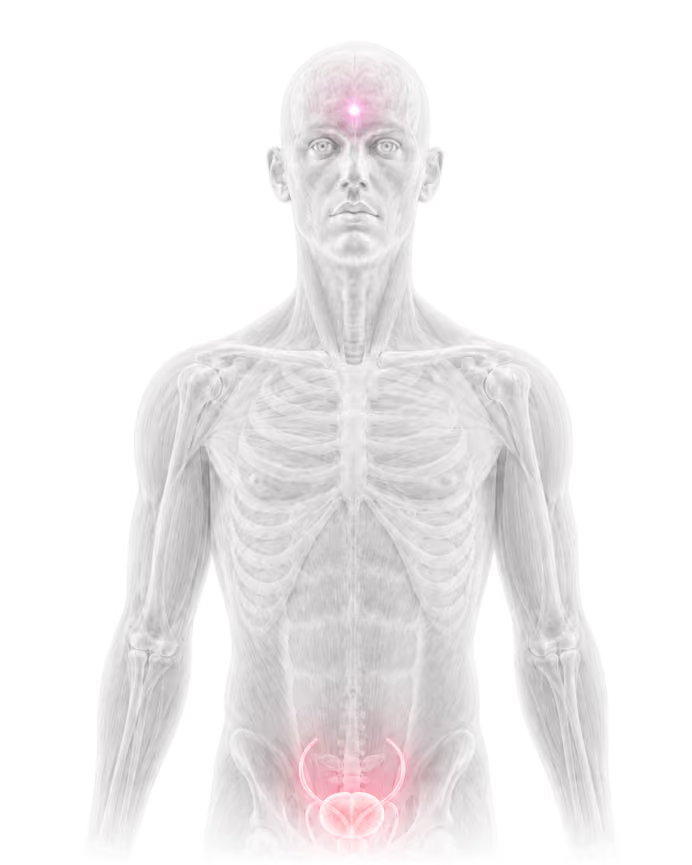
THC has been associated in some studies with changes in reproductive signaling and sperm function, particularly with frequent exposure.

CBD

Evidence Strength

CBD’s effects on reproductive systems are still being studied, and current evidence remains limited.

This summary table reflects findings from human studies and preclinical research. Some effects are well characterized, while others remain under active investigation.

Emerging / preclinical evidence
Moderate / mixed human evidence
Stronger human evidence

Responses to cannabinoids can vary based on: dose and formulation, route of administration, frequency of use, individual biology and co-medications.

Reproductive System 

Skin 

THC

Evidence Strength

THC has been associated in some studies with changes in reproductive signaling and sperm function, particularly with frequent exposure.

CBD

Evidence Strength

CBD’s effects on reproductive systems are still being studied, and current evidence remains limited.

This summary table reflects findings from human studies and preclinical research. Some effects are well characterized, while others remain under active investigation.

Emerging / preclinical evidence
Moderate / mixed human evidence
Stronger human evidence

Responses to cannabinoids can vary based on: dose and formulation, route of administration, frequency of use, individual biology and co-medications.

Skin 

Side Effects & Toxicity 

THC

Evidence Strength

THC’s effects are dose-dependent and may include impairment of coordination, attention, and perception, especially at higher exposures.

CBD

Evidence Strength

CBD is generally well tolerated but may cause fatigue, digestive upset, and interactions with certain medications at higher doses.

This summary table reflects findings from human studies and preclinical research. Some effects are well characterized, while others remain under active investigation.

Emerging / preclinical evidence
Moderate / mixed human evidence
Stronger human evidence

Responses to cannabinoids can vary based on: dose and formulation, route of administration, frequency of use, individual biology and co-medications.

Side Effects & Toxicity 

Biological System (Pathway)

THC

CBD

Psychoactivity 

THC

Evidence Strength

THC activates CB1 receptors in the brain, which is associated with changes in perception, mood, and sensory awareness.

CBD

Evidence Strength

CBD activates CB1 receptors,but not in the same direct way as THC, and is not associated with intoxicating effects.

This summary table reflects findings from human studies and preclinical research. Some effects are well characterized, while others remain under active investigation.

Emerging / preclinical evidence

Moderate / mixed human evidence

Stronger human evidence

Responses to cannabinoids can vary based on: dose and formulation, route of administration, frequency of use, individual biology and co-medications.

Psychoactivity 

Intoxicating; alters perception and awareness in a dose-dependent manner.

Non-intoxicating; does not produce a “high.” May influence how THC is experienced. 

Brain & Perception 

THC

Evidence Strength

THC influences brain regions involved in memory, attention, and sensory processing, which may alter perception and cognitive performance.

CBD

Evidence Strength

CBD is being studied for its interaction with neural signaling pathways involved in mood and stress response, though effects can vary.

This summary table reflects findings from human studies and preclinical research. Some effects are well characterized, while others remain under active investigation.

Emerging / preclinical evidence

Moderate / mixed human evidence

Stronger human evidence

Responses to cannabinoids can vary based on: dose and formulation, route of administration, frequency of use, individual biology and co-medications.

Brain & Perception 

Affects attention, memory, sensory perception, and reward pathways. Higher doses may impair cognition. 

Studied for effects on mood, anxiety, and neural signaling. Evidence varies by use case.

Nervous System

THC

Evidence Strength

THC affects central nervous system signaling, including pathways involved in pain perception, coordination, and sensory input.

CBD

Evidence Strength

CBD has been studied for its effects on neuronal excitability and inflammation, with the strongest clinical evidence in certain seizure conditions.

This summary table reflects findings from human studies and preclinical research. Some effects are well characterized, while others remain under active investigation.

Emerging / preclinical evidence

Moderate / mixed human evidence

Stronger human evidence

Responses to cannabinoids can vary based on: dose and formulation, route of administration, frequency of use, individual biology and co-medications.

Nervous System

Influences pain perception, motor coordination, and sensory processing. May cause sedation or impairment. 

Studied for anticonvulsant, anti-inflammatory, and neuro-modulatory effects. Strongest evidence in seizure disorders. 

Immune System 

THC

Evidence Strength

THC interacts with cannabinoid receptors involved in immune signaling, which may influence inflammatory responses depending on context.

CBD

Evidence Strength

CBD is being studied for anti-inflammatory and immunomodulatory activity, primarily in laboratory and early clinical research settings.

This summary table reflects findings from human studies and preclinical research. Some effects are well characterized, while others remain under active investigation.

Emerging / preclinical evidence

Moderate / mixed human evidence

Stronger human evidence

Responses to cannabinoids can vary based on: dose and formulation, route of administration, frequency of use, individual biology and co-medications.

Immune System 

Interacts with immune signaling; effects appear dose- and context-dependent. 

Studied for anti-inflammatory and immunomodulatory properties, primarily in preclinical models. 

Digestive Tract 

THC

Evidence Strength

THC interacts with receptors in the gut that influence appetite, nausea signaling, and gastrointestinal motility.

CBD

Evidence Strength

CBD is being studied for its effects on gut inflammation and barrier function, though human evidence remains limited.

This summary table reflects findings from human studies and preclinical research. Some effects are well characterized, while others remain under active investigation.

Emerging / preclinical evidence

Moderate / mixed human evidence

Stronger human evidence

Responses to cannabinoids can vary based on: dose and formulation, route of administration, frequency of use, individual biology and co-medications.

Digestive Tract 

Associated with appetite stimulation and anti-nausea effects. High or chronic use may cause GI disturbances in some individuals. 

Studied for gut-related inflammation and barrier function. May cause GI side effects at higher doses.

Musculoskeletal System 

THC

Evidence Strength

THC influences central pain signaling and muscle tone, which may affect how physical discomfort or tension is perceived.

CBD

Evidence Strength

CBD is being studied for anti-inflammatory and analgesic mechanisms that may relate to musculoskeletal function.

This summary table reflects findings from human studies and preclinical research. Some effects are well characterized, while others remain under active investigation.

Emerging / preclinical evidence

Moderate / mixed human evidence

Stronger human evidence

Responses to cannabinoids can vary based on: dose and formulation, route of administration, frequency of use, individual biology and co-medications.

Musculoskeletal System 

Influences pain signaling and muscle tone. May contribute to perceived relief of discomfort or stiffness.

Studied for anti-inflammatory and analgesic effects. Evidence is emerging and not yet uniform.

Cardiovascular System

THC

Evidence Strength

THC can acutely increase heart rate and influence vascular tone, with effects that vary based on dose and individual physiology.

CBD

Evidence Strength

CBD is being studied for its effects on vascular function and blood pressure regulation, though clinical outcomes are still being evaluated.

This summary table reflects findings from human studies and preclinical research. Some effects are well characterized, while others remain under active investigation.

Emerging / preclinical evidence

Moderate / mixed human evidence

Stronger human evidence

Responses to cannabinoids can vary based on: dose and formulation, route of administration, frequency of use, individual biology and co-medications.

Cardiovascular System

May increase heart rate and alter blood pressure acutely. Effects depend on dose and individual risk factors.

Studied for vascular and blood pressure effects. Clinical significance remains under investigation.

Endocrine System 

THC

Evidence Strength

THC interacts with signaling pathways that influence hormone regulation, including stress and reproductive hormone systems.

CBD

Evidence Strength

CBD may influence hormonal and metabolic signaling pathways, but these effects are not yet well defined in human studies.

This summary table reflects findings from human studies and preclinical research. Some effects are well characterized, while others remain under active investigation.

Emerging / preclinical evidence

Moderate / mixed human evidence

Stronger human evidence

Responses to cannabinoids can vary based on: dose and formulation, route of administration, frequency of use, individual biology and co-medications.

Endocrine System 

Interacts with hormone signaling pathways, including stress and reproductive axes. Effects vary with exposure patterns.

Less well defined; may influence hormone and metabolic signaling. Research is ongoing.

Reproductive System 

THC

Evidence Strength

THC has been associated in some studies with changes in reproductive signaling and sperm function, particularly with frequent exposure.

CBD

Evidence Strength

CBD’s effects on reproductive systems are still being studied, and current evidence remains limited.

This summary table reflects findings from human studies and preclinical research. Some effects are well characterized, while others remain under active investigation.

Emerging / preclinical evidence

Moderate / mixed human evidence

Stronger human evidence

Responses to cannabinoids can vary based on: dose and formulation, route of administration, frequency of use, individual biology and co-medications.

Reproductive System 

Associated with changes in reproductive signaling and sperm function in some studies.

Limited human data; potential effects are still being investigated. Use during pregnancy remains a caution area.

Skin 

THC

Evidence Strength

Cannabinoid receptors are present in the skin, and THC is being studied for its interaction with skin-related signaling pathways.

CBD

Evidence Strength

CBD is being studied for its effects on skin inflammation, oil production, and barrier function, particularly in early-stage research.

This summary table reflects findings from human studies and preclinical research. Some effects are well characterized, while others remain under active investigation.

Emerging / preclinical evidence

Moderate / mixed human evidence

Stronger human evidence

Responses to cannabinoids can vary based on: dose and formulation, route of administration, frequency of use, individual biology and co-medications.

Skin 

Cannabinoid receptors are present in skin; effects are under study with limited clinical evidence.

Studied for anti-inflammatory and sebaceous activity in skin. Evidence is early-stage.

Side Effects & Toxicity

THC

Evidence Strength

THC’s effects are dose-dependent and may include impairment of coordination, attention, and perception, especially at higher exposures.

CBD

Evidence Strength

CBD is generally well tolerated but may cause fatigue, digestive upset, and interactions with certain medications at higher doses.

This summary table reflects findings from human studies and preclinical research. Some effects are well characterized, while others remain under active investigation.

Emerging / preclinical evidence

Moderate / mixed human evidence

Stronger human evidence

Responses to cannabinoids can vary based on: dose and formulation, route of administration, frequency of use, individual biology and co-medications.

Side Effects & Toxicity

May cause impairment, anxiety, dizziness, and dependence with heavy use. Dose-dependent effects.

Generally well tolerated, but may cause fatigue, GI upset, and liver enzyme changes at higher doses. Drug interactions possible.

Minor Cannabinoids & Their Effects

CBC

CBC studied for anti-inflammatory, analgesic, and neuroprotective effects; human evidence remains limited. (PMC)

Read more

CBG 

CBG is being studied for inflammatory, pain, antibacterial, and neuroprotective effects…

Read more

CBN 

CBN is often discussed in relation to sleep, though human evidence is still limited…

Read more

CBDV 

CBDV has been studied most for anticonvulsant effects…

Read more

THCV

THCV is being studied for appetite, glucose regulation, and metabolic signaling…

Read more

Slide Left
Slide Right

Terpenes:

Aromatics in Cannabis Experiences

Terpenes are abundant in nature and give many plants their distinctive scents. In cannabis, they contribute to a strain’s particular aroma, and aromatherapy science suggests they may play a role in how products are experienced.

Over 200 terpenes exist in cannabis, but only 30-60 appear in notable amounts. Early studies suggest some terpenes may affect mood, stress, and cognition by interacting with brain pathways.

Common Cannabis Terpenes & Their Studied Effects

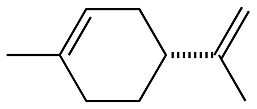
Limonene

Aroma:

Citrus

Also in:

Lemon, Grapefruit, Juniper

Effects:

Energizing • Uplifting

Pinene

Aroma:

Pine, Citrus

Also in:

Pine, Rosemary, Sage

Effects:

Energizing • Focusing

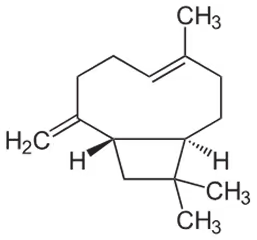
Caryophyllene

Aroma:

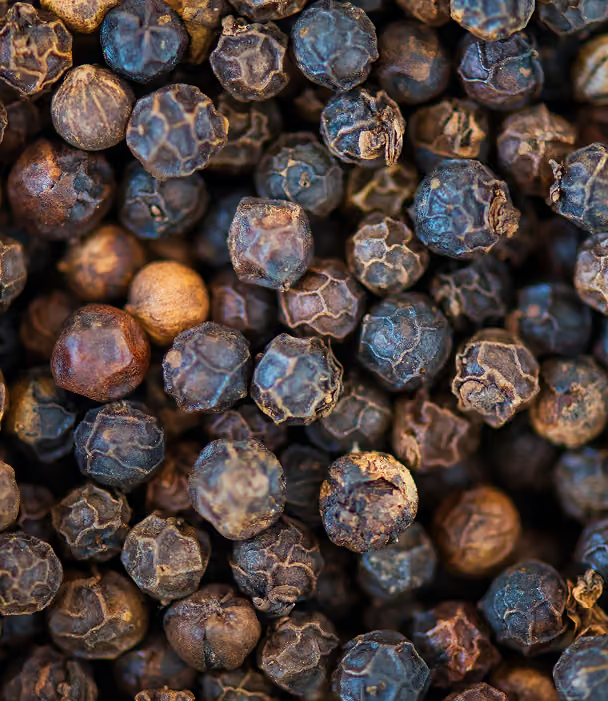
Pepper, Spice

Also in:

Black Pepper, Basil, Oregano

Effects:

Focusing • Relaxing

Linalool

Aroma:

Floral (lavender)

Also in:

Lavender, Laurel, Rosewood

Effects:

Relaxing • Calming

Myrcene

Aroma:

Earthy, Musky

Also in:

Clove, Mango, Thyme

Effects:

Relaxing • Sedating

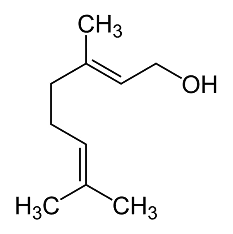
Geraniol

Aroma:

Floral (Rose)

Also in:

Rose, Citronella, Fruit

Effects:

Relaxing • Uplifting

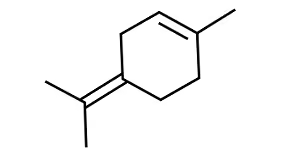
Terpinolene

Aroma:

Herbal, Sweet, Diesel

Also in:

Nutmeg, Tea Tree, Apple

Effects:

Focusing • Energizing

Eucalyptol

Aroma:

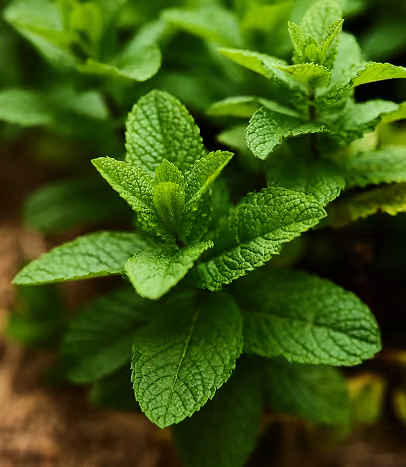
Mint

Also in:

Eucalyptus, Pine, Sage

Effects:

Calming • Focusing

Bisabolol

Aroma:

Floral, Fruity

Also in:

Chamomile, Hibiscus

Effects:

Calming • Relaxing

Ocimene

Aroma:

Tropical Fruit

Also in:

Mango, Basil, Mint

Effects:

Focusing • Energizing

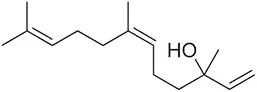
Nerolidol

Aroma:

Floral, Fruity

Also in:

Jasmine, Orange, Ginger

Effects:

Calming • Sedating

Humulene

Aroma:

Earthy, Herbal, Woody

Also in:

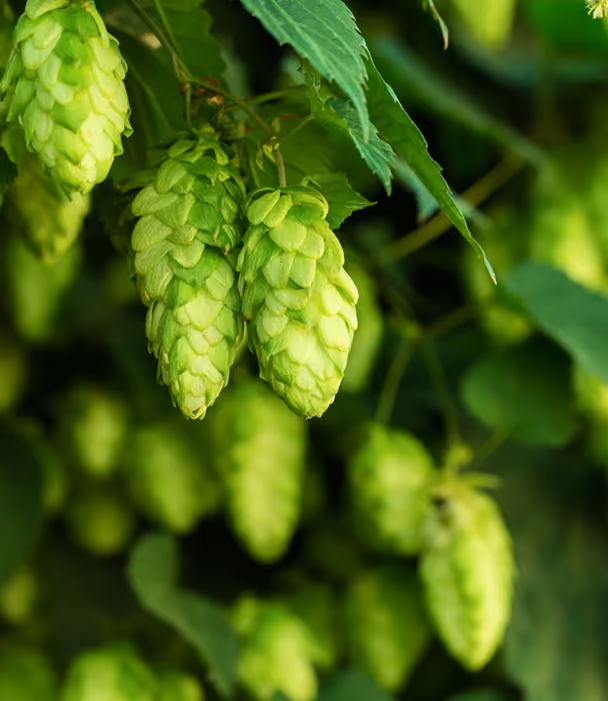
Hops, Basil, Coriander

Effects:

Focusing, Calming

Slide Left
Slide Right

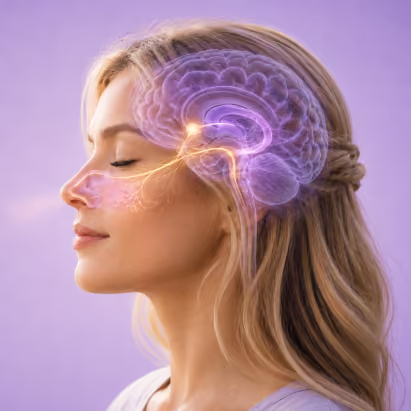
How aroma connects to the brain

From Scent to Perception

Terpenes in cannabis are the same molecules that give flowers, fruits, and plants their recognizable scents.
When inhaled, these molecules stimulate the olfactory nerve, a direct pathway to the brain, where their signals shape how we think, feel, and experience the world.

Common Cannabis Terpenes & Their Studied Effects

Aroma Detection

The olfactory nerve detects aroma molecules in the air and sends signals directly to the brain for recognition.

Neural Processing

Aroma signals are routed to brain regions involved in memory, emotion, and perception.

Perceptual Influence

These pathways influence neurotransmitter balance, shaping perception and mood.

Slide Left
Slide Right

A Closer Look:

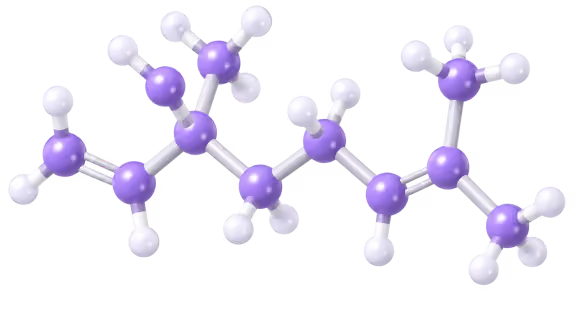
Linalool

Linalool is the dominant terpene found in lavender essential oil, and gives lavender it's characteristic scent. It has been studied for its ability to promote GABA release, a neurotransmitter associated with calm and relaxation.

Lavender Scent

GABA release

Calm & relaxing

Flavonoids

Color, Flavor, and Broader Plant Chemistry

Flavonoids are natural compounds found throughout the plant world. They contribute to color, flavor, and the broader character of many plants and foods.

In cannabis, flavonoids complement cannabinoids and terpenes and are best understood as part of the plant’s overall chemical composition rather than isolated drivers of effect.

Color

Contributes to the rich spectrum of plant hues.

Plant Defense

Supports protection from UV,
pests, and stress.

Antioxidant Activity

Studied for antioxidant and
signaling effects.

Common Cannabis Flavonoids & Their Studied Effects

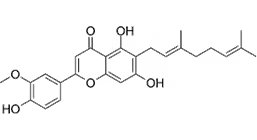
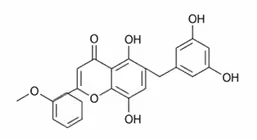
Cannflavin A

Characteristic Coloration

THC activates CB1 receptors in the brain, which is associated with changes in perception, mood, and sensory awareness.

Studied / Hypothesized Role

Studied for anti-inflammatory signaling pathways in preclinical models.

Cannflavin A

Cannflavin B

Characteristic Coloration

Subtle yellow-green tones

Studied / Hypothesized Role

Structurally related to Cannflavin A and studied for similar anti-inflammatory activity in laboratory research.

Cannflavin B

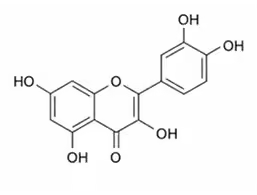
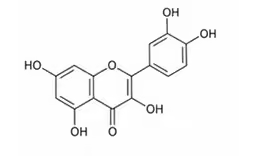
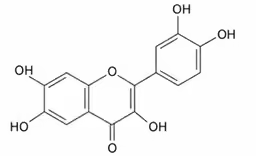
Quercetin

Characteristic Coloration

Yellow-gold hues, also contributes to browning / oxidation tones in plants

Studied / Hypothesized Role

Studied for antioxidant activity and cellular signaling effects across multiple biological systems.

Quercetin

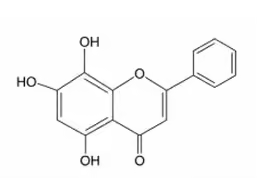
Apigenin

Characteristic Coloration

Pale yellow / chamomile tones

Studied / Hypothesized Role

Studied for interactions with neural signaling pathways related to stress response and relaxation.

Apigenin

Kaempferol

Characteristic Coloration

Yellow to light green tones

Studied / Hypothesized Role

Studied for antioxidant activity and cellular response signaling in preclinical research.

Kaempferol

Luteolin

Characteristic Coloration

Yellow / yellow-orange tones

Studied / Hypothesized Role

Studied for anti-inflammatory and neuroprotective pathways in laboratory models.

Luteolin

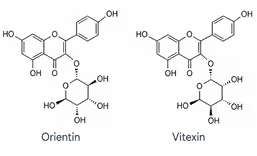
Orientin / Vitexin

Characteristic Coloration

Light yellow to amber tones

Studied / Hypothesized Role

Studied for antioxidant and cellular stress-response pathways in early-stage research.

Orientin / Vitexin

Flavonoid
Characteristic Coloration
Studied / Hypothesized Role

Cannflavin A

Evidence Strength

Cannflavin A is a flavonoid found almost exclusively in cannabis and is being studied for anti-inflammatory signaling pathways in preclinical models.

This summary table reflects findings from human studies and preclinical research. Some effects are well characterized, while others remain under active investigation.

Emerging / preclinical evidence

Moderate / mixed human evidence

Stronger human evidence

Response to terpenes can vary based on dose and formulation, route of administration, individual biology and medications

Cannflavin A

Subtle yellow-green tones

Studied for anti-inflammatory signaling pathways in preclinical models.

Cannflavin B

Evidence Strength

Cannflavin B is structurally similar to Cannflavin A and has been studied in laboratory settings for potential anti-inflammatory activity.

This summary table reflects findings from human studies and preclinical research. Some effects are well characterized, while others remain under active investigation.

Emerging / preclinical evidence

Moderate / mixed human evidence

Stronger human evidence

Response to terpenes can vary based on dose and formulation, route of administration, individual biology and medications

Cannflavin B

Subtle yellow-green tones

Structurally related to Cannflavin A and studied for similar anti-inflammatory activity in laboratory research.

Quercetin

Evidence Strength

Quercetin is a widely occurring plant flavonoid also found in cannabis, studied for antioxidant and cellular signaling effects across multiple biological systems.

This summary table reflects findings from human studies and preclinical research. Some effects are well characterized, while others remain under active investigation.

Emerging / preclinical evidence

Moderate / mixed human evidence

Stronger human evidence

Response to terpenes can vary based on dose and formulation, route of administration, individual biology and medications

Quercetin

Yellow-gold hues, also contributes to browning / oxidation tones in plants

Studied for antioxidant activity and cellular signaling effects across multiple biological systems.

Apigenin

Evidence Strength

Apigenin is a plant-derived flavonoid found in cannabis and other plants, studied for interactions with neural signaling pathways related to stress and relaxation responses.

This summary table reflects findings from human studies and preclinical research. Some effects are well characterized, while others remain under active investigation.

Emerging / preclinical evidence

Moderate / mixed human evidence

Stronger human evidence

Response to terpenes can vary based on dose and formulation, route of administration, individual biology and medications

Apigenin

Pale yellow / chamomile tones

Studied for interactions with neural signaling pathways related to stress response and relaxation.

Kaempferol

Evidence Strength

Kaempferol is a flavonoid found in many plants including cannabis, studied for antioxidant activity and cellular signaling in preclinical research.

This summary table reflects findings from human studies and preclinical research. Some effects are well characterized, while others remain under active investigation.

Emerging / preclinical evidence

Moderate / mixed human evidence

Stronger human evidence

Response to terpenes can vary based on dose and formulation, route of administration, individual biology and medications

Kaempferol

Yellow to light green tones

Studied for antioxidant activity and cellular response signaling in preclinical research.

Luteolin

Evidence Strength

Luteolin is a flavonoid present in cannabis and other plants, studied for anti-inflammatory and neuroprotective pathways in laboratory models.

This summary table reflects findings from human studies and preclinical research. Some effects are well characterized, while others remain under active investigation.

Emerging / preclinical evidence

Moderate / mixed human evidence

Stronger human evidence

Response to terpenes can vary based on dose and formulation, route of administration, individual biology and medications

Luteolin

Yellow / yellow-orange tones

Studied for anti-inflammatory and neuroprotective pathways in laboratory models.

Orientin / Vitexin

Evidence Strength

Orientin and vitexin are plant flavonoids occasionally identified in cannabis, studied for antioxidant and cellular stress-response pathways.

This summary table reflects findings from human studies and preclinical research. Some effects are well characterized, while others remain under active investigation.

Emerging / preclinical evidence

Moderate / mixed human evidence

Stronger human evidence

Response to terpenes can vary based on dose and formulation, route of administration, individual biology and medications

Orientin / Vitexin

Light yellow to amber tones

Studied for antioxidant and cellular stress-response pathways in early-stage research.

Neurotransmitters:

The Brain Chemistry Behind Perception and Mood.

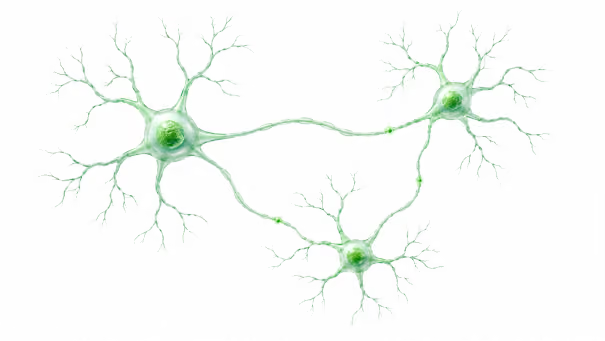
Mood and perception are chemical—they are shaped by how nerve cells in the brain communicate with one another to process sensory inputs, integrate memory, identify recognizable patterns, and coordinate action or response.


This communication occurs through chemical messengers called neurotransmitters, which help regulate how signals are passed, processed, and interpreted throughout the nervous system.Understanding this process provides a foundation for exploring how plant-derived compounds are studied for their interaction with these signaling pathways.

Read more

Common Cannabis Terpenes & Their Studied Effects

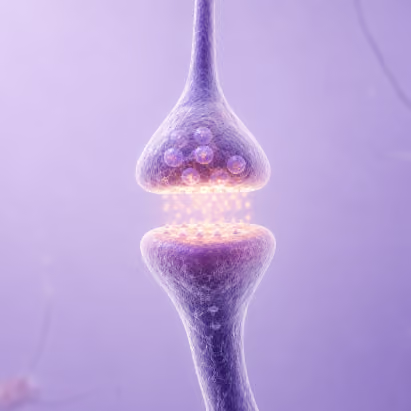
How Neurons Communicate

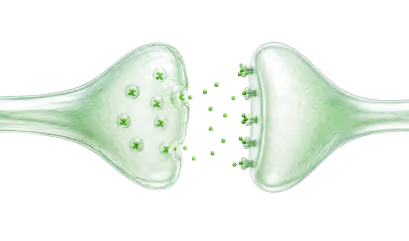
Neurons connect at synapses. When a neuron sends a signal, neurotransmitters cross the gap and bind to receptors on the next neuron, like a lock and key.

Signal Types

Activation

Excites the next neuron, increasing the chance of a signal.

Inhibition

Reduces the likelihood of the next neuron firing.

Modulation

Fine-tunes neural activity and shapes responses.

Ending the Signal

Reuptake

Neuron reabsorbs original neurotransmitter for reuse.

Metabolism

Enzymes break down neurotransmitters.

Diffusion

Neurotransmitters drift away from the synapse.

Slide Left
Slide Right

A Dynamic System

Neurotransmitter activity is always adjusting to internal and external factors. Cannabis-derived compounds are being studied for how they may influence these signaling systems rather than replace them.

Key Neurotransmitters and Their Roles

Different neurotransmitters are associated with different aspects of mood, attention, and perception. While their functions overlap, each plays a distinct role in how experiences are processed.

Dopamine

Dopamine is involved in reward signaling, motivation, and reinforcement of behaviors. It plays a role in how the brain processes anticipation, attention, and goal-directed activity.

Read more

Serotonin

Serotonin is involved in mood regulation, emotional balance, sleep cycles, and appetite. It helps coordinate internal stability across multiple systems.

Read more

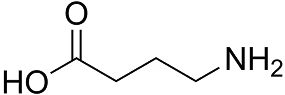
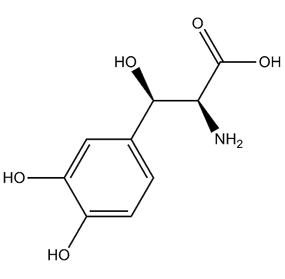
GABA

GABA is the primary inhibitory neurotransmitter in the brain, helping to reduce neural activity and regulate excitability.

Read more

Glutamate

Glutamate is the primary excitatory neurotransmitter and plays a central role in learning, memory formation, and information processing.

Read more

Norepinephrine

Norepinephrine is involved in
alertness, attention, and the body’s response to stress, helping regulate arousal and focus.

Read more

Endorphins

Endorphins are involved in pain modulation and reward signaling, and are associated with physical comfort and stress adaptation.

Read more

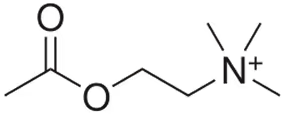
Acetylcholine

Acetylcholine plays a key role in attention, learning, memory, and muscle activation across the nervous system.

Read more

Slide Left
Slide Right

The Entourage Effect

Emerging research suggests cannabis compounds work better together. The entourage effect describes how cannabinoids, terpenes, and flavonoids may interact to shape the overall experience.

The whole experience
is greater than the sum of its parts.

Cannabis compounds may work together in complex ways, creating an effect that is different than the effect of any one ingredient on its own.

Let’s use an analogy.

Think of your cannabis experience like driving a car.

THC is the accelerator

If your cannabis experience was a car, THC would be the gas pedal—the further you push it, the faster you’ll go.

Terpenes

Terpenes are the specific aroma compounds in cannabis that work together to shape the overall mood of that "high".

Terpene potency

Overwhelming terpenes with THC is the equivalent of just gripping the wheel and speeding past the scenery without savoring the drive.

Slide Left
Slide Right

Coordinating Stress Response, Stability, and Balance

The Endocannabinoid System (ECS)

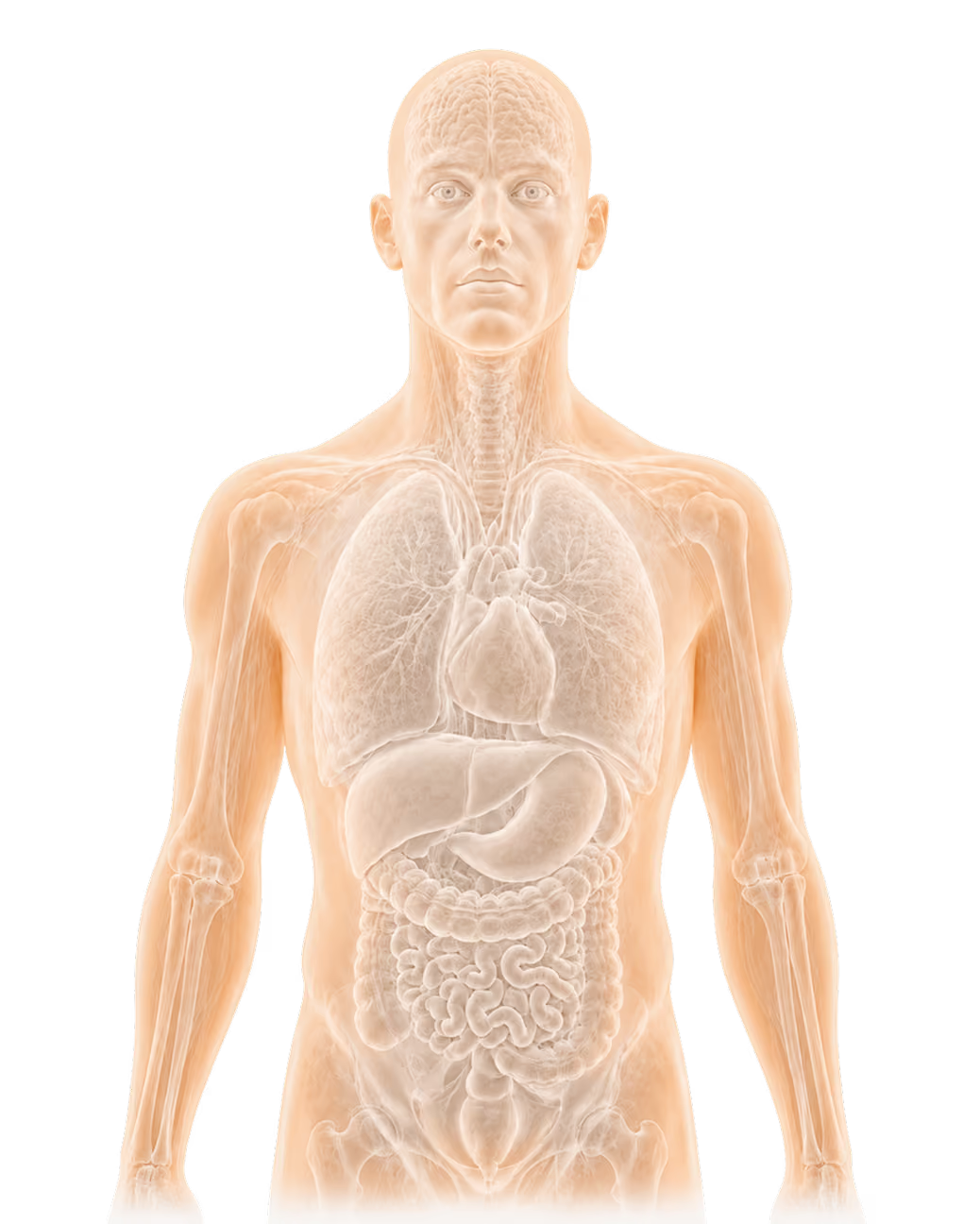
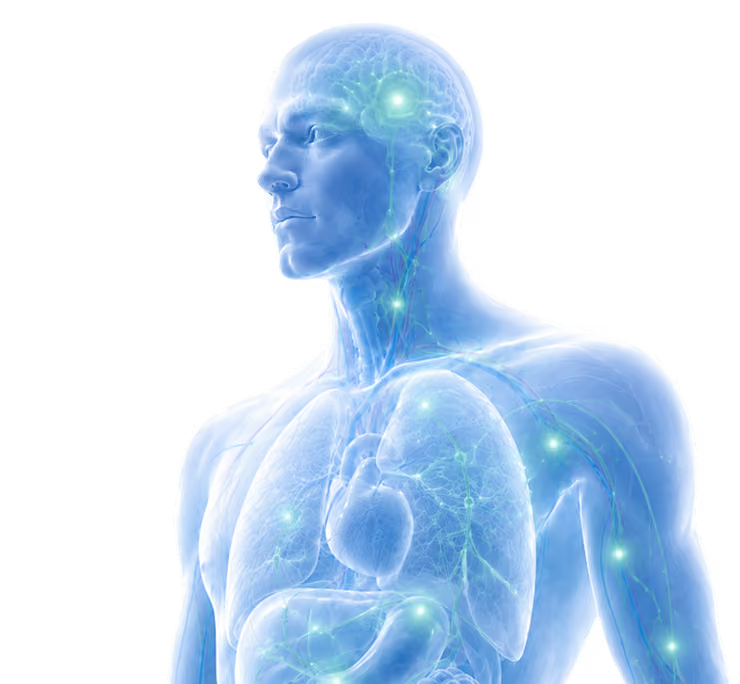
The ECS, recently discovered, is our internal master regulator, using natural chemical messengers to maintain mind-body balance during stress. Cannabis cannabinoids mimic ECS messengers, influencing mood, energy, focus, relaxation, immunity, and other processes. The ECS regulates nearly every organ system, explaining cannabinoids' wide effects on body and mind.

An Internal Regulatory System Revealed by Scientific Research

Scientists discovered the endocannabinoid system (ECS) in the late 20th century while researching how compounds like THC interact with the body. They discovered a network of receptors, signaling molecules, and enzymes distributed throughout the brain and body, revealing an internal system that responds to both naturally produced and plant-derived compounds.

~2700 BCE

Ancient Use

Cannabis appears in early historical records as a botanical substance used across cultures for a variety of purposes. While the underlying biology was unknown at the time, these early observations laid the foundation for modern scientific interest.

1940s

Early Cannabinoid Research

Scientists begin isolating compounds from cannabis and studying their chemical properties. This marked the transition from observational use to laboratory-based investigation.

1964


THC is Discovered

Δ9-tetrahydrocannabinol (THC), the primary psychoactive compound in cannabis, is isolated and structurally characterized. This discovery enabled researchers to begin studying how cannabis produces its effects in the human body.

1960s–1970s

THC Effects Observed

Early studies explore how THC influences brain function, perception, and behavior. These findings suggested the presence of specific biological targets in the body, a key clue that led to receptor discovery.

1988


CB1 Receptor Discovered

The first cannabinoid receptor (CB1) is identified in the brain. This was a breakthrough moment, revealing that the body has a dedicated receptor system responsive to cannabinoids.

1990

The ECS Is Revealed

The concept of the endocannabinoid system (ECS) emerges as researchers recognize that cannabinoid receptors are part of a broader signaling network. This reframed cannabis research from isolated compounds to a biological system of regulation.

1992

Anandamide is Discovered

The first endogenous, internally produced cannabinoid, anandamide, is identified. This confirmed that the body produces its own cannabinoid-like molecules, not just responding to external ones from the cannabis plant.

1993

CB2 Receptor Discovered

A second receptor, CB2, is identified, primarily associated with peripheral tissues and immune-related signaling.

A Timeline of Discovery

Hover on time periods for more information.

Slide Left
Slide Right

A Biological System with a Purpose: Maintaining Balance

The ECS is now understood to play a critical role in helping the body maintain a state of internal balance, often referred to as homeostasis.
Rather than driving a single function, it acts as a modulatory system, adjusting how other signaling pathways behave in response to changing conditions, including stress, environmental input, and internal physiological states.
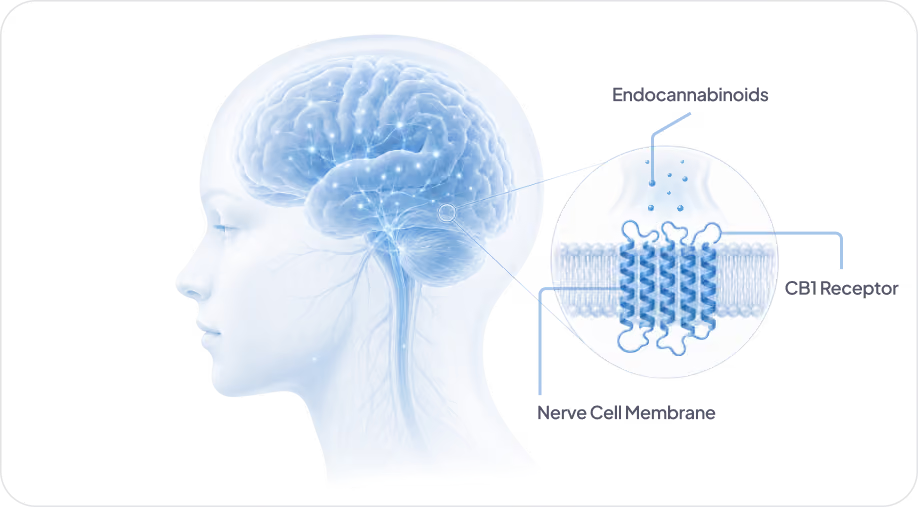
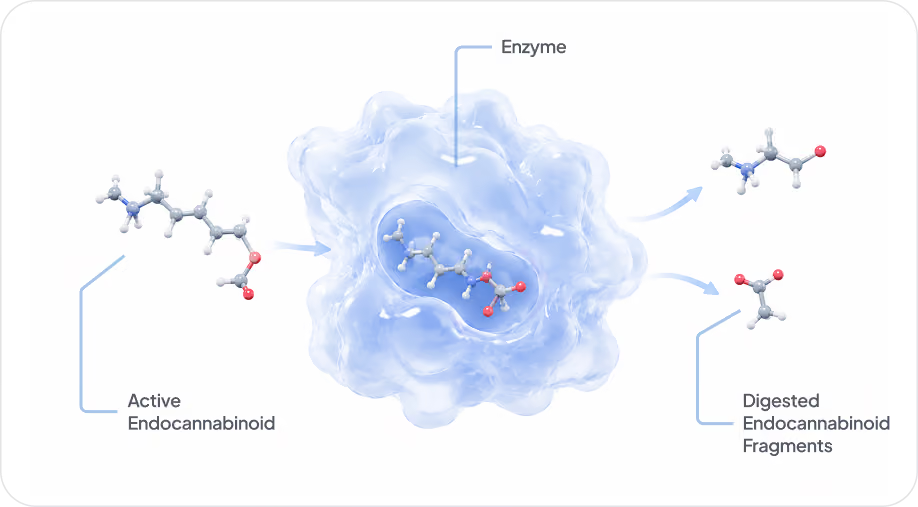
We now know that the endocannabinoid system is widely distributed throughout the body, but is made up of three core components: signaling molecules (endocannabinoids), receptors, and the enzymes that create and break them down.

Endocannabinoids

The body produces its own cannabinoid-like molecules, known as endocannabinoids, the most studied of which are anandamide (AEA) and 2-arachidonoylglycerol (2-AG). These molecules bind to cannabinoid receptors and help regulate signaling across multiple organ systems.

AEA

Anandamide

2-AG

2-Arachidonoylglycerol

Receptors

The endocannabinoid system operates through two primary receptor types, CB1 and CB2, which help translate chemical signals from endocannabinoids into biological responses. These receptors are part of a coordinated signaling network, working together across the brain and body to regulate internal balance.

Enzymes

The enzymes that build and break down endocannabinoids (for example FAAH and MAGL), which control how longthese molecules stay active.

Key Point

Plant-derived cannabinoids like THC and CBD are being studied for how they specifically interact with the body’s endocannabinoid system, not by replacing it's parts, but by influencing how it functions.

A complex signaling network with system-wide influence

  • The ECS is active across many organ systems, reflecting its role as a broad regulatory network.

  • The endocannabinoid system does not operate in isolation. It interacts with neurotransmitters, hormones, and other signaling systems throughout the body.
  • Understanding this network provides important context for how cannabis-derived compounds are studied for their potential to influence perception, mood, and human experience.

“The thing about science is that it's true whether you believe in it or not."

— Neil deGrasse Tyson

Limonene

Evidence Strength

Studied for potential effects on mood-related pathways, including serotonin and dopamine signaling. Some small human studies (aromatherapy context) suggest stress-modulating effects.

Evidence indicators reflect current research, including lab and limited human studies. Many associations remain under investigation.

Emerging / preclinical evidence

Moderate / mixed human evidence

Stronger human evidence

Response to terpenes can vary based on dose and formulation, route of administration, individual biology and medications

Myrcene

Evidence Strength

Studied in preclinical models for sedative-like and muscle-relaxant effects. May interact with pathways involved in inhibitory (GABA-related) signaling.

Evidence indicators reflect current research, including lab and limited human studies. Many associations remain under investigation.

Emerging / preclinical evidence

Moderate / mixed human evidence

Stronger human evidence

Response to terpenes can vary based on dose and formulation, route of administration, individual biology and medications

Linalool

Evidence Strength

Studied for calming and anxiolytic-like effects, with evidence suggesting interaction with glutamate and GABA signaling pathways. Human data primarily derived from lavender-based studies.

Evidence indicators reflect current research, including lab and limited human studies. Many associations remain under investigation.

Emerging / preclinical evidence

Moderate / mixed human evidence

Stronger human evidence

Response to terpenes can vary based on dose and formulation, route of administration, individual biology and medications

Caryophyllene

Evidence Strength

Studied for its interaction with CB2 receptors in the endocannabinoid system. Preclinical research explores potential roles in stress and inflammation-related pathways.

Evidence indicators reflect current research, including lab and limited human studies. Many associations remain under investigation.

Emerging / preclinical evidence

Moderate / mixed human evidence

Stronger human evidence

Response to terpenes can vary based on dose and formulation, route of administration, individual biology and medications

Geraniol

Evidence Strength

Studied in preclinical models for potential neuroprotective and anxiolytic-like effects. May interact with oxidative stress pathways and neurotransmitter systems involved in mood regulation.

Evidence indicators reflect current research, including lab and limited human studies. Many associations remain under investigation.

Emerging / preclinical evidence

Moderate / mixed human evidence

Stronger human evidence

Response to terpenes can vary based on dose and formulation, route of administration, individual biology and medications

Terpinolene

Evidence Strength

Emerging research suggests possible sedative-like and antioxidant activity in preclinical models. Neurological effects remain under investigation.

Evidence indicators reflect current research, including lab and limited human studies. Many associations remain under investigation.

Emerging / preclinical evidence

Moderate / mixed human evidence

Stronger human evidence

Response to terpenes can vary based on dose and formulation, route of administration, individual biology and medications

Eucalyptol

Evidence Strength

Studied for potential effects on cognitive and attentional pathways, with some human research suggesting improved alertness and mental clarity. Also explored for anti-inflammatory activity that may influence neurological function.

Evidence indicators reflect current research, including lab and limited human studies. Many associations remain under investigation.

Emerging / preclinical evidence

Moderate / mixed human evidence

Stronger human evidence

Response to terpenes can vary based on dose and formulation, route of administration, individual biology and medications

Ocimene

Evidence Strength

Limited research available. Early findings and observational data suggest potential interactions with alertness-related pathways, though evidence remains preliminary.

Evidence indicators reflect current research, including lab and limited human studies. Many associations remain under investigation.

Emerging / preclinical evidence

Moderate / mixed human evidence

Stronger human evidence

Response to terpenes can vary based on dose and formulation, route of administration, individual biology and medications

Nerolidol

Evidence Strength

Studied in preclinical models for sedative-like and anxiolytic-like effects. May interact with central nervous system pathways involved in relaxation and sleep-related behaviors.

Evidence indicators reflect current research, including lab and limited human studies. Many associations remain under investigation.

Emerging / preclinical evidence

Moderate / mixed human evidence

Stronger human evidence

Response to terpenes can vary based on dose and formulation, route of administration, individual biology and medications

Bisabolol

Evidence Strength

Studied primarily for anti-inflammatory and antioxidant effects. Emerging research suggests potential indirect influence on stress-related pathways, though central nervous system effects remain under investigation.

Evidence indicators reflect current research, including lab and limited human studies. Many associations remain under investigation.

Emerging / preclinical evidence

Moderate / mixed human evidence

Stronger human evidence

Response to terpenes can vary based on dose and formulation, route of administration, individual biology and medications

Humulene

Evidence Strength

Studied primarily for anti-inflammatory effects, which may indirectly influence overall physiological state. Limited direct research on mood-specific pathways.

Evidence indicators reflect current research, including lab and limited human studies. Many associations remain under investigation.

Emerging / preclinical evidence

Moderate / mixed human evidence

Stronger human evidence

Response to terpenes can vary based on dose and formulation, route of administration, individual biology and medications

Pinene

Evidence Strength

Studied for potential effects on alertness and memory-related pathways, including acetylcholine signaling. Some evidence of anxiolytic-like effects in preclinical models

Evidence indicators reflect current research, including lab and limited human studies. Many associations remain under investigation.

Emerging / preclinical evidence

Moderate / mixed human evidence

Stronger human evidence

Response to terpenes can vary based on dose and formulation, route of administration, individual biology and medications

CBC

Studied Effects

Evidence Strength

CBC is being studied for anti-inflammatory, analgesic, neuroprotective, and mood-related effects, but most supporting evidence remains preclinical.

Side Effects & Toxicity

Evidence Strength

CBC safety data in humans are still limited, and current reviews emphasize that tolerability remains incompletely characterized.

This summary table reflects findings from human studies and preclinical research. Some effects are well characterized, while others remain under active investigation.

Emerging / preclinical evidence

Moderate / mixed human evidence

Stronger human evidence

Responses to cannabinoids can vary based on: dose and formulation, route of administration, frequency of use, individual biology and co-medications.

CBG

Studied Effects

Evidence Strength

CBG is being studied for inflammatory, pain, antibacterial, neuroprotective, and metabolic pathways, with most evidence coming from laboratory and animal research.

Side Effects & Toxicity

Evidence Strength

Human safety data for CBG remain sparse. Some animal studies suggest mild cannabinoid-like behavioral effects at certain doses.

This summary table reflects findings from human studies and preclinical research. Some effects are well characterized, while others remain under active investigation.

Emerging / preclinical evidence

Moderate / mixed human evidence

Stronger human evidence

Responses to cannabinoids can vary based on: dose and formulation, route of administration, frequency of use, individual biology and co-medications.

CBN

Studied Effects

Evidence Strength

CBN is often discussed in relation to sleep, but human evidence is still limited and many studies combine it with THC, making its independent role difficult to isolate.

Side Effects & Toxicity

Evidence Strength

CBN may be less intoxicating than THC, but its sedative profile, next-day effects, and long-term safety are still under active study.

This summary table reflects findings from human studies and preclinical research. Some effects are well characterized, while others remain under active investigation.

Emerging / preclinical evidence

Moderate / mixed human evidence

Stronger human evidence

Responses to cannabinoids can vary based on: dose and formulation, route of administration, frequency of use, individual biology and co-medications.

CBDV

Studied Effects

Evidence Strength

CBDV has been studied most for anticonvulsant effects. Preclinical seizure models have been encouraging, but human trial results have been mixed.

Side Effects & Toxicity

Evidence Strength

CBDV showed an acceptable safety profile in a Phase 2 trial, though long-term tolerability and condition-specific efficacy remain under investigation.

This summary table reflects findings from human studies and preclinical research. Some effects are well characterized, while others remain under active investigation.

Emerging / preclinical evidence

Moderate / mixed human evidence

Stronger human evidence

Responses to cannabinoids can vary based on: dose and formulation, route of administration, frequency of use, individual biology and co-medications.

THCV

Studied Effects

Evidence Strength

THCV is being studied for appetite, glucose regulation, and metabolic signaling. Early human studies are promising, but larger trials are still needed.

Side Effects & Toxicity

Evidence Strength

Low-dose oral THCV appears to have minimal THC-like subjective effects in humans, while higher doses may produce mild cannabinoid-like effects.

This summary table reflects findings from human studies and preclinical research. Some effects are well characterized, while others remain under active investigation.

Emerging / preclinical evidence

Moderate / mixed human evidence

Stronger human evidence

Responses to cannabinoids can vary based on: dose and formulation, route of administration, frequency of use, individual biology and co-medications.

Dopamine

Evidence Strength

Dopamine is involved in reward signaling, motivation, and reinforcement of behaviors. It plays a role in how the brain processes anticipation, attention, and goal-directed activity.

Why it matters:

• Helps shape how experiences feel rewarding or motivating

• Influences focus, drive, and reinforcement of habits

This summary table reflects findings from human studies and preclinical research. Some effects are well characterized, while others remain under active investigation.

Emerging / preclinical evidence

Moderate / mixed human evidence

Stronger human evidence

Serotonin

Evidence Strength

Serotonin is involved in mood regulation, emotional balance, sleep cycles, and appetite. It helps coordinate internal stability across multiple systems.

Why it matters:
• Contributes to emotional steadiness and mood balance
 • Influences sleep patterns and overall sense of well-being

This summary table reflects findings from human studies and preclinical research. Some effects are well characterized, while others remain under active investigation.

Emerging / preclinical evidence

Moderate / mixed human evidence

Stronger human evidence

GABA

Evidence Strength

GABA is the primary inhibitory neurotransmitter in the brain, helping to reduce neural activity and regulate excitability.

Why it matters:
• Helps calm overstimulation in neural circuits
• Supports relaxation and stress regulation

This summary table reflects findings from human studies and preclinical research. Some effects are well characterized, while others remain under active investigation.

Emerging / preclinical evidence

Moderate / mixed human evidence

Stronger human evidence

Glutamate

Evidence Strength

Glutamate is the primary excitatory neurotransmitter and plays a central role in learning, memory formation, and information processing.

Why it matters:
• Drives learning and memory formation
• Supports rapid information processing in the brain

This summary table reflects findings from human studies and preclinical research. Some effects are well characterized, while others remain under active investigation.

Emerging / preclinical evidence

Moderate / mixed human evidence

Stronger human evidence

Norepinephrine

Evidence Strength

Norepinephrine is involved in alertness, attention, and the body's response to stress, helping regulate arousal and focus.

Why it matters:
• Helps sharpen attention and situational awareness
• Plays a role in how the body responds to stress

This summary table reflects findings from human studies and preclinical research. Some effects are well characterized, while others remain under active investigation.

Emerging / preclinical evidence

Moderate / mixed human evidence

Stronger human evidence

Endorphins

Evidence Strength

Endorphins are involved in pain modulation and reward signaling and are associated with physical comfort and stress adaptation.

Why it matters:
• Contribute to feelings of physical ease or relief
• Associated with positive sensations after exertion

This summary table reflects findings from human studies and preclinical research. Some effects are well characterized, while others remain under active investigation.

Emerging / preclinical evidence

Moderate / mixed human evidence

Stronger human evidence

Acetylcholine

Evidence Strength

Acetylcholine plays a key role in attention, learning, memory, and muscle activation across the nervous system.

Why it matters
• Supports attention and mental clarity
• Essential for memory formation and physical coordination

This summary table reflects findings from human studies and preclinical research. Some effects are well characterized, while others remain under active investigation.

Emerging / preclinical evidence

Moderate / mixed human evidence

Stronger human evidence