You're about to leave thePowerLeaf educational environment.

You are about to enter the website of a licensed cannabis retailer. Product availability, pricing, ordering, fulfillment, and compliance are managed entirely by the retailer, not by PowerLeaf.

Choose a Participating Retailer

Each retailer is independently owned and operated. Selecting one takes you to their separate commercial website.

Mother Earth Wellness

Pawtucket, Rhode Island

Independently owned and operated

More partners coming soon

Additional licensed retailers using PowerLeaf

This list grows as new partners join

Continue

PowerLeaf does not sell cannabis, make product recommendations, provide medical advice, or endorse products for therapeutic effects.
Cannabis is not approved by the FDA for the treatment, cure, or prevention of any disease. Information here is for educational purposes only. PowerLeaf.com is aneducational websitethat helps consumers understand cannabis ingredients and reported experience categories.

Go Back

Go Back
You're about to leave thePowerLeaf educational environment.

You are about to enter the website of a licensed cannabis retailer. Product availability, pricing, ordering, fulfillment, and compliance are managed entirely by the retailer, not by PowerLeaf.

Choose a Participating Retailer

Each retailer is independently owned and operated. Selecting one takes you to their separate commercial website.

Mother Earth Wellness

Pawtucket, Rhode Island

Independently owned and operated

More partners coming soon

Additional licensed retailers using PowerLeaf

This list grows as new partners join

PowerLeaf.com is an educational website that helps consumers understand cannabis ingredients and reported experience categories. PowerLeaf does not sell cannabis, make product recommendations, provide medical advice, or endorse products for therapeutic effects.Cannabis is not approved by the FDA for the treatment, cure, or prevention of any disease. Information here is for educational purposes only.

What You Don’t See Matters.

Clarity starts with what’s measured

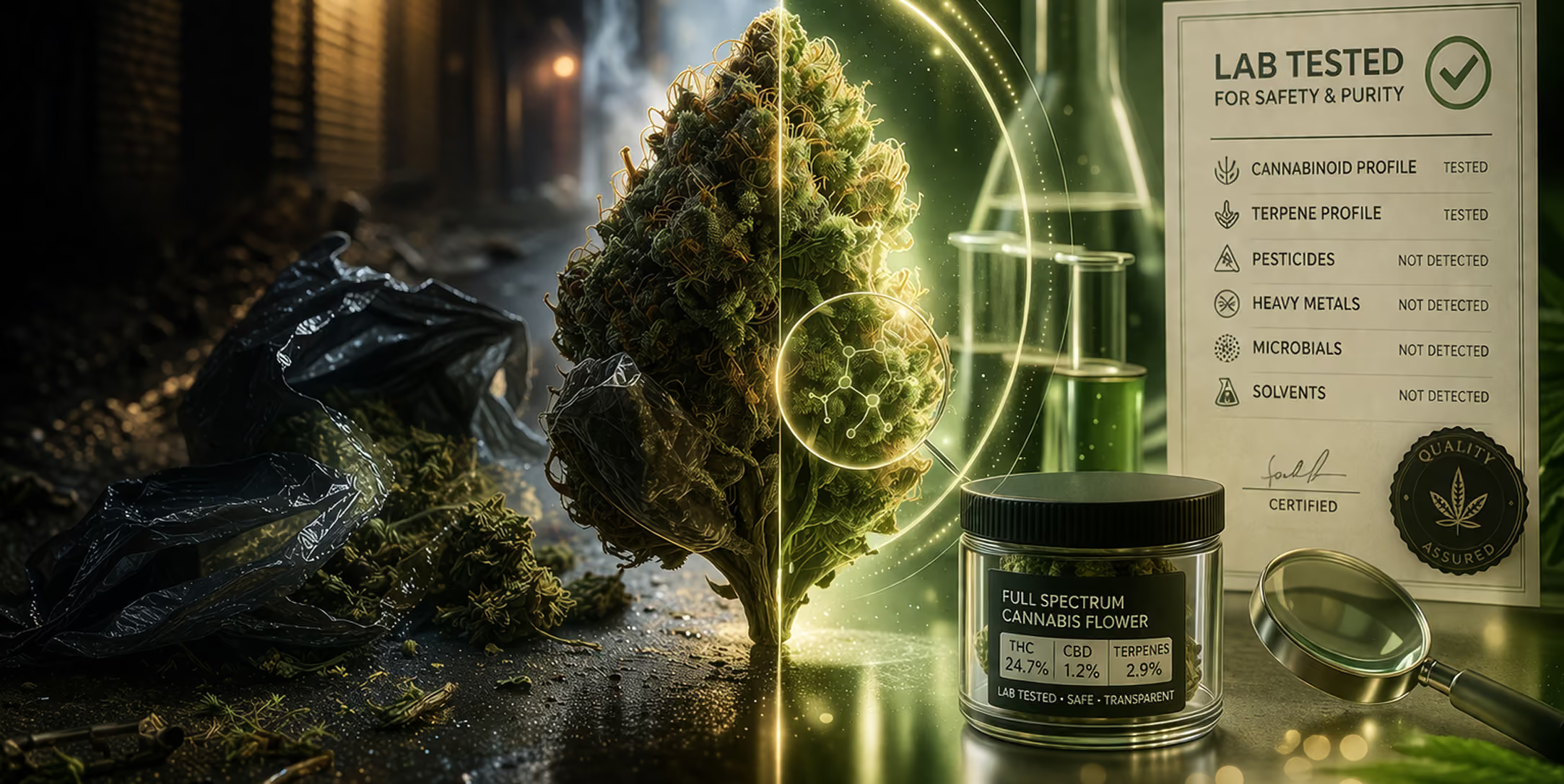
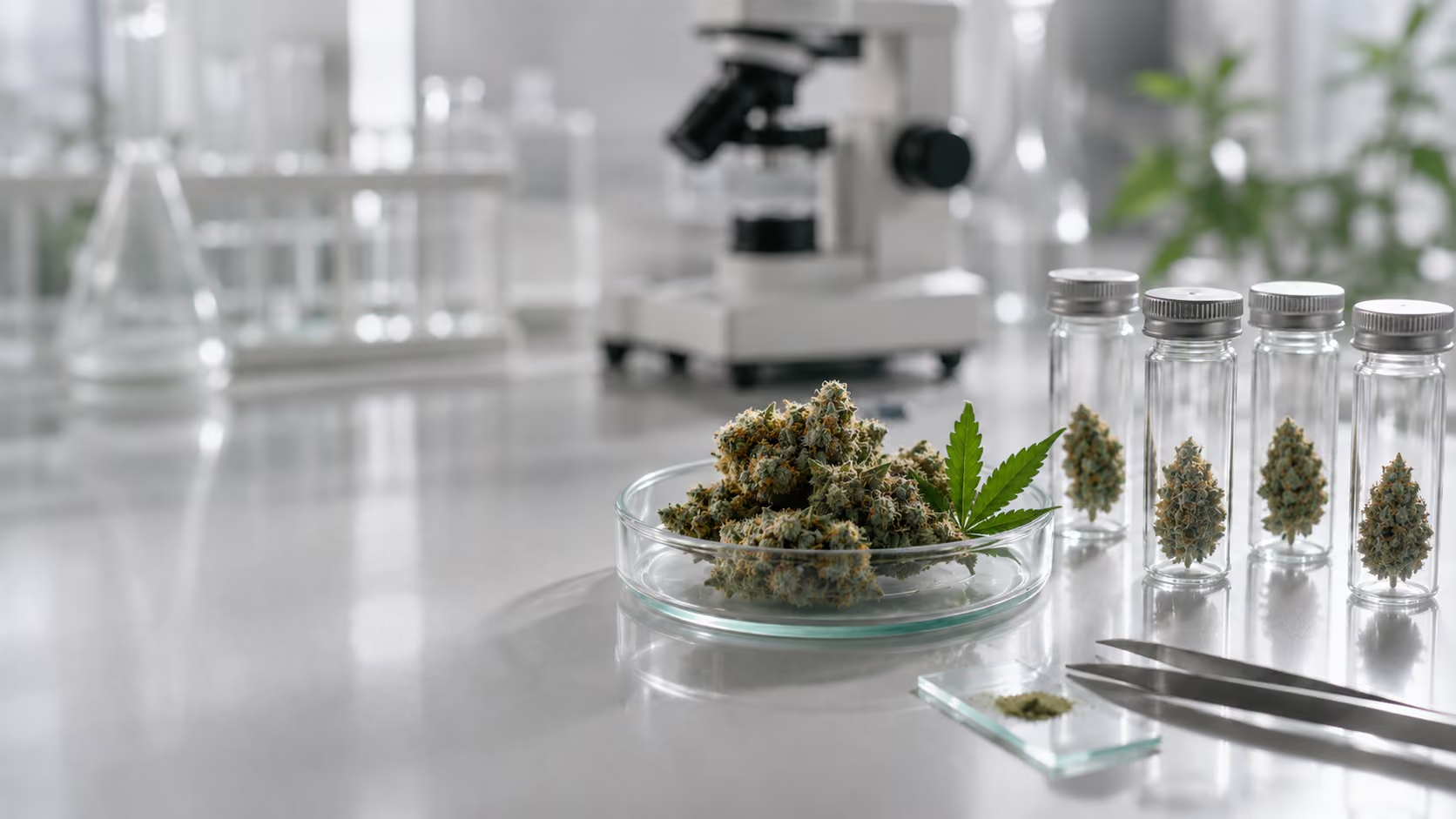
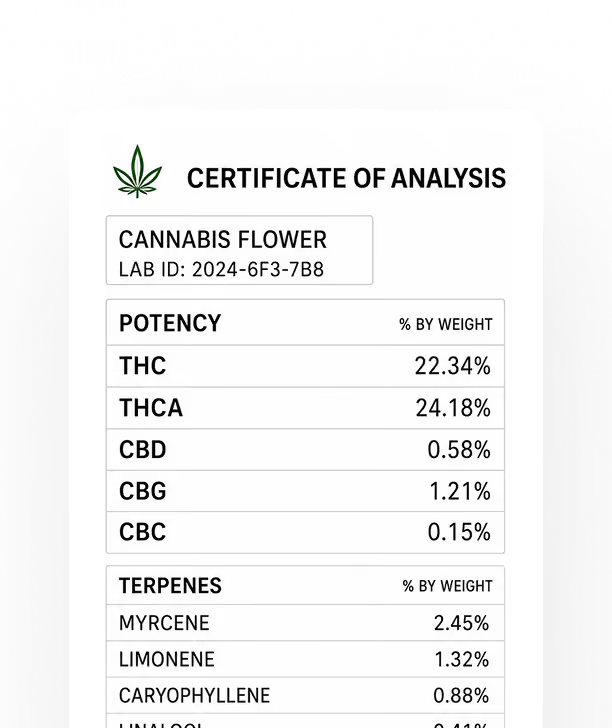
Legal cannabis products are subject to laboratory testing, designed to screen for contaminants and provide transparency into what’s inside Products obtained outside of regulated markets may not undergo the same level of testing or disclosure, which can limit visibility into ingredient composition and potential impurities.


Testing in regulated markets is intended to help ensure:

• Screening for common contaminants
• Clear labeling of key product ingredients


Understanding what’s measured is the first step toward understanding what you consume.

From Unknown To Measured

The Process Behind Product Transparency

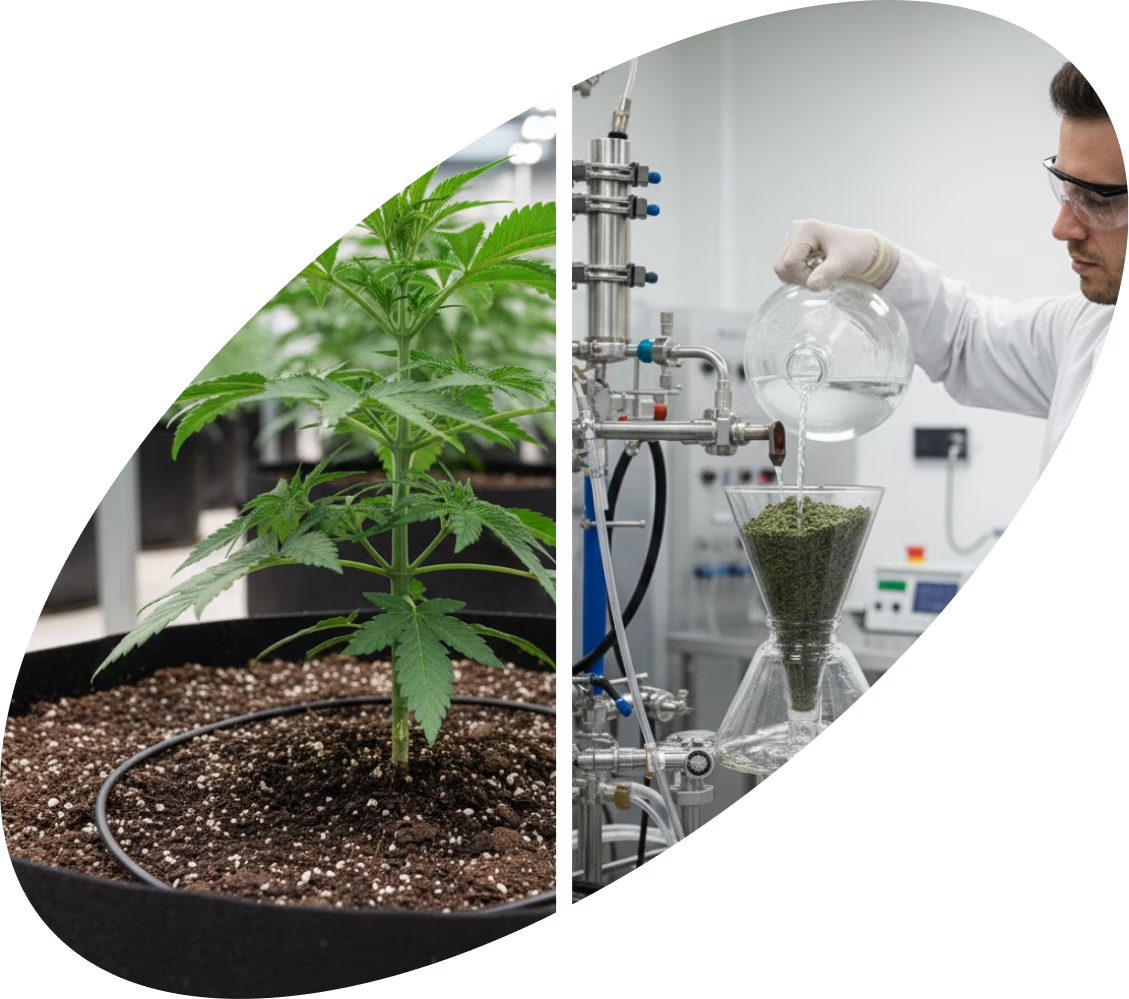
Cannabis in its natural form is a plant—but like any agricultural product, it can be affected by environmental and processing-related contaminants In regulated markets, products are tested by licensed laboratories to screen for potential impurities.

These testing standards are designed to provide greater transparency into product composition and help identify substances that may not be visible to the consumer.

Certified Testing Lab
Pesticide Residues
Pesticide Residues
Inhalation or ingestion of some pesticides can cause injury to the lungs and nervous system, especially with repeated exposure over time.
Did You Know?
Even cannabis that is grown indoors in controlled environments can contain trace levels of pesticides that creep in from unsuspected sources.  Chemicals may linger in soils, enter a facility through ventilation ducts via outside air, or sneak in from contaminated fertilizers.
Toxic Metals
Toxic Metals
Metals like lead, arsenic, and cadmium can build up in the body over time, causing damage to the brain, kidneys, and immune system if they reach toxic levels.
Did You Know?
Cannabis root systems act like natural sponges, soaking up metals and other chemical contaminants from soil, water, or nutrient mixes, and can end up being stored in concentrated form within the plant.
Mold & Bacteria
Mold & Bacteria
Harmful microbes like E. coli, Salmonella, or Aspergillus can cause serious infections, especially in people with weakened immune systems.
Did You Know?
Warm, humid grow rooms are perfect incubators for yeast and mold.  Even a few stray spores can thrive and multiply in dense cannabis flowers or areas of the canopy that don't get enough air flow.
Residual Solvents
Residual Solvents
Inhaling residual solvents that are used in the extraction process to produce concentrates can irritate the lungs and lead to dizziness, headaches, and other toxicity.
Did You Know?
Extraction often uses a chemical solvent to separate ingredient-rich oil from the plant matter.  If the final solvent removal step isn't performed well, dangerous chemical solvents like propane or butane that may be used in that process could be left behind in your product.

Pesticide Residues

Inhalation or ingestion of some pesticides can cause injury to the lungs and nervous system, especially with repeated exposure over time.

Even cannabis that is grown indoors in controlled environments can contain trace levels of pesticides that creep in from unsuspected sources.  Chemicals may linger in soils, enter a facility through ventilation ducts via outside air, or sneak in from contaminated fertilizers.

Pesticide Residues

Toxic Metals

Inhalation or ingestion of some pesticides can cause injury to the lungs and nervous system, especially with repeated exposure over time.

Even cannabis that is grown indoors in controlled environments can contain trace levels of pesticides that creep in from unsuspected sources.  Chemicals may linger in soils, enter a facility through ventilation ducts via outside air, or sneak in from contaminated fertilizers.

Toxic Metals

Residual Solvents

Inhalation or ingestion of some pesticides can cause injury to the lungs and nervous system, especially with repeated exposure over time.

Even cannabis that is grown indoors in controlled environments can contain trace levels of pesticides that creep in from unsuspected sources.  Chemicals may linger in soils, enter a facility through ventilation ducts via outside air, or sneak in from contaminated fertilizers.

Residual Solvents

Mold & Bacteria

Inhalation or ingestion of some pesticides can cause injury to the lungs and nervous system, especially with repeated exposure over time.

Even cannabis that is grown indoors in controlled environments can contain trace levels of pesticides that creep in from unsuspected sources.  Chemicals may linger in soils, enter a facility through ventilation ducts via outside air, or sneak in from contaminated fertilizers.

Mold & Bacteria

Making Sense of
Cannabis Product Labels

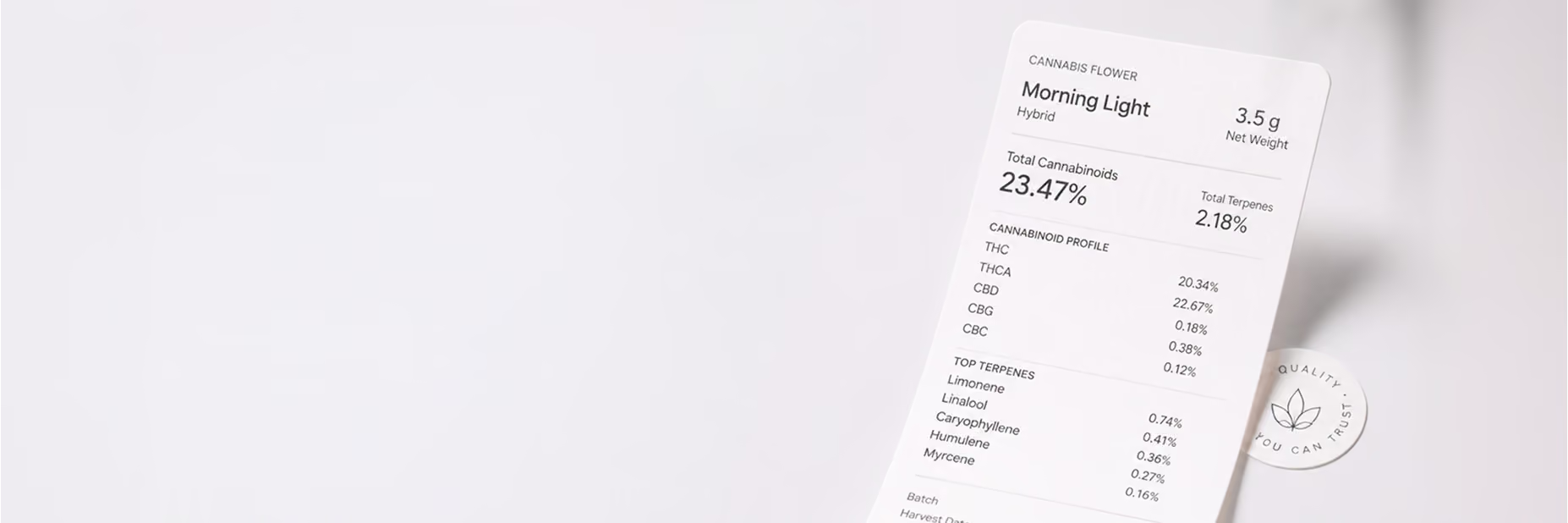
Cannabis product labels list key product ingredients and potencies—but without context, these numbers can be overwhelming and difficult to interpret. Understanding what these numbers mean, and how they differ across product types, is an important step toward making informed decisions.

Understanding labels

Cannabis product labels list key product ingredients and potencies, but without context, these numbers can be overwhelming and difficult to interpret.

Understanding what these numbers mean, and how they differ across product types, is an important step toward making informed decisions.

Potency vs. Dose

What’s the difference?

%

Potency

Potency refers to the concentration of THC in a product, typically shown as a percentage on the label. That percentage represents the proportion of the product that is THC by weight, not how much THC is actually consumed.

mg

Dose

Dose refers to the total amount of THC, in milligrams, that is actually consumed during product use. Dose depends on both the product’s THC potency and how much of the product was consumed.

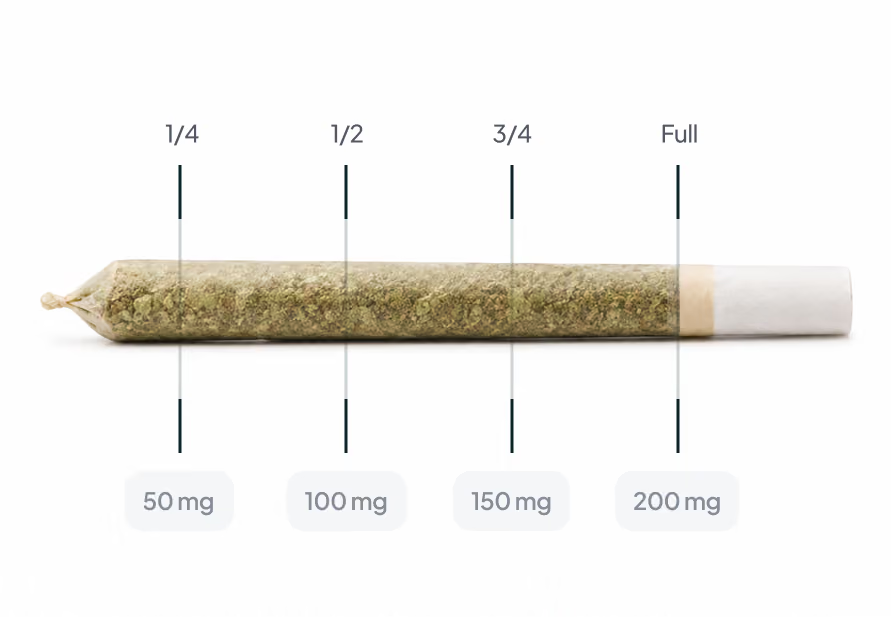
How to calculate the dose of THC consumed

1

1 gram = 1000 mg total product weight

2

20% THC = 20% of that pre-roll’s weight is THC

3

That means the full pre-roll contains 200 mg THC

If you consume

1/2 of the pre-roll
≈ 100 mg THC
1/4 of the pre-roll
≈ 50 mg THC

Key Takeaway

A higher potency doesn’t always mean a higher dose. The same dose can be achieved by consuming products with different potency levels. It simply means that less of the higher-potency product needs to be consumed to reach that target dose.

Typical THC Potency Ranges by Product Type

Flower
Concentrates
Edibles
Flower

Cannabinoid content in flower products is usually expressed as a percentage of total weight. Flower products often sit in the moderate THC range, though infused versions can be higher.

Typical range: 10–30%+ THC

Flower Buds

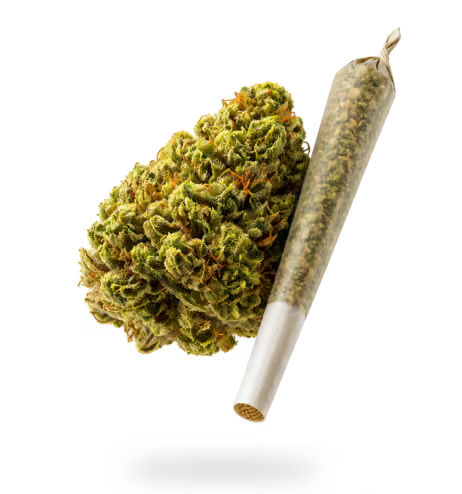
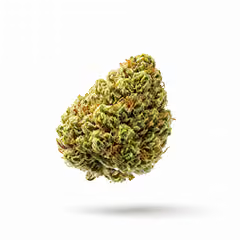
Whole dried cannabis flower, typically expressed as a percentage of total weight.

≈ 15–25% THC

Pre-roll

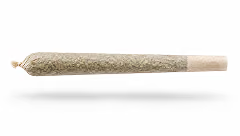
Ground flower rolled for ready-to-use consumption, usually similar in potency to flower.

≈ 10–25% THC

Infused Pre-roll

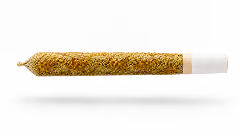
Pre-rolls enhanced with concentrates for increased potency and intensity.

≈ 20–40% THC

Concentrates

Concentrates are higher-potency cannabis products made by isolating or refining cannabinoid-rich material. THC is usually expressed as a percentage of total weight.

Typical range: Varies by product subtype

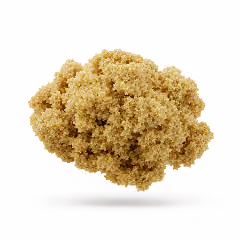
Bubble Hash

Solventless concentrate made with ice water and agitation. It preserves more of the plant’s trichome profile and is often valued for flavor and texture.

≈ 40–70% THC

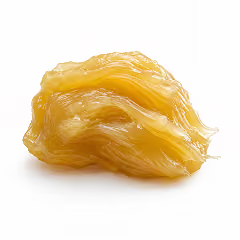
Rosin

Solventless extract made using heat and pressure. Often positioned as a cleaner, full-spectrum concentrate option.

≈ 60–80% THC

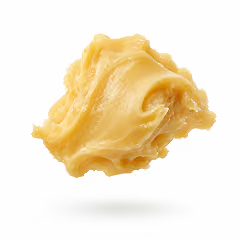
Budder

A creamy, whipped concentrate with a soft texture. Usually easy to handle and portion compared to harder extracts.

≈ 60–80% THC

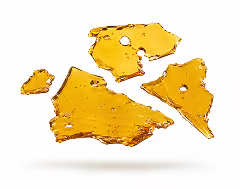
Shatter

A glass-like concentrate known for high potency and a brittle texture. Often used when consumers want a stronger, more concentrated product.

≈ 70–90% THC

Distillate

Highly refined THC oil created through distillation. Usually very potent, with fewer plant compounds remaining compared to full-spectrum extracts.

≈ 80–95% THC

Edibles

Edibles are usually labeled by total cannabinoid content per serving, piece, or package. Unlike flower and concentrates, THC is shown in milligrams rather than percentage.

Typical range: 5-10 mgTHC per serving

Cannabis Chocolate

Infused chocolate products labeled by THC per piece or serving. Potency can vary depending on the size of each portion.

≈ 5-10 mg per piece

Cannabis Gummies

A common edible format with precise serving sizes. Gummies are often labeled per gummy and per pack.

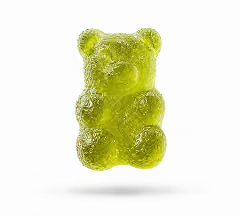
≈ 5-10 mg per gummy

Cannabis Baked Goods

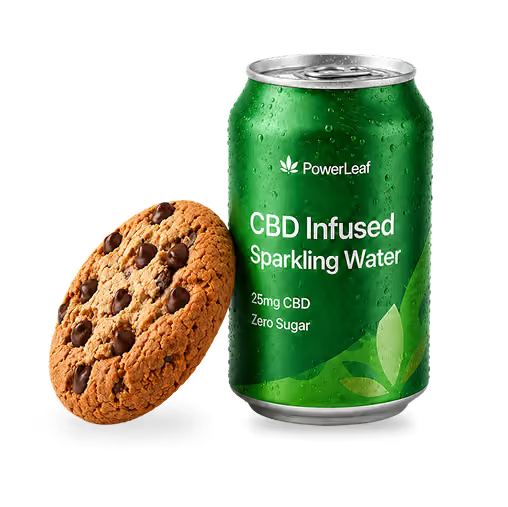
Cookies, brownies, and other infused baked products. Serving size matters because one item may contain multiple doses.

≈ 5–10 mg per serving

Cannabis Beverages

THC-infused drinks labeled by serving, can, or bottle. Some beverage formats are designed for faster onset depending on formulation.

≈ 2.5-10 mg

Cannabis Tinctures

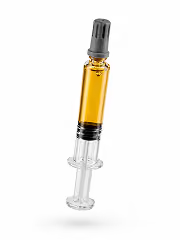
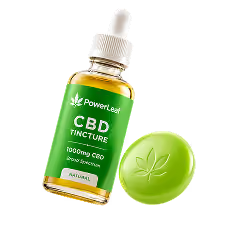
Refined oil extract.  Offered as single-compound "isolate" products or full-spectrum plant (complete natural ingredient profile) extracts.

≈ 80–95% THC

Important note

THC ranges vary by brand, formulation, serving size, and product format. These examples are meant to provide general context, not exact product standards.

PowerLeaf simplifies cannabis data into clear insights.

From Raw Data to Real Understanding

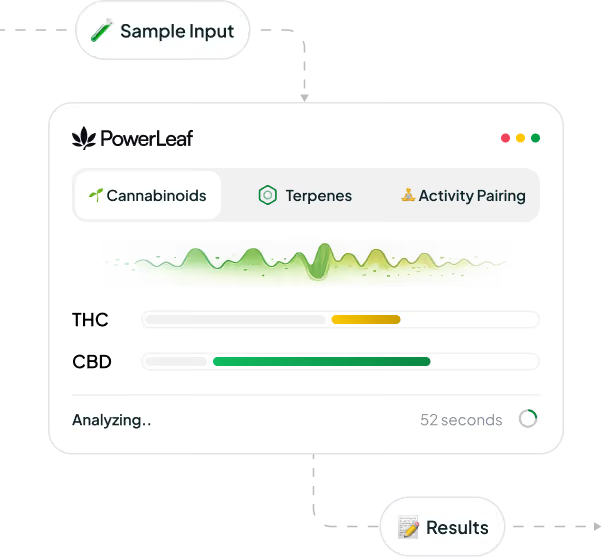
PowerLeaf transforms complex laboratory data into structured, ingredient-based insights using a proprietary algorithm rooted in science and shaped by real-world, consumer-reported experiences. Rather than relying strictly on consumer reviews, strain names, or THC potency alone, PowerLeaf analyzes complete ingredient profiles to fit products into real-world contextual frameworks.

Turning Data Into Something You Can Use

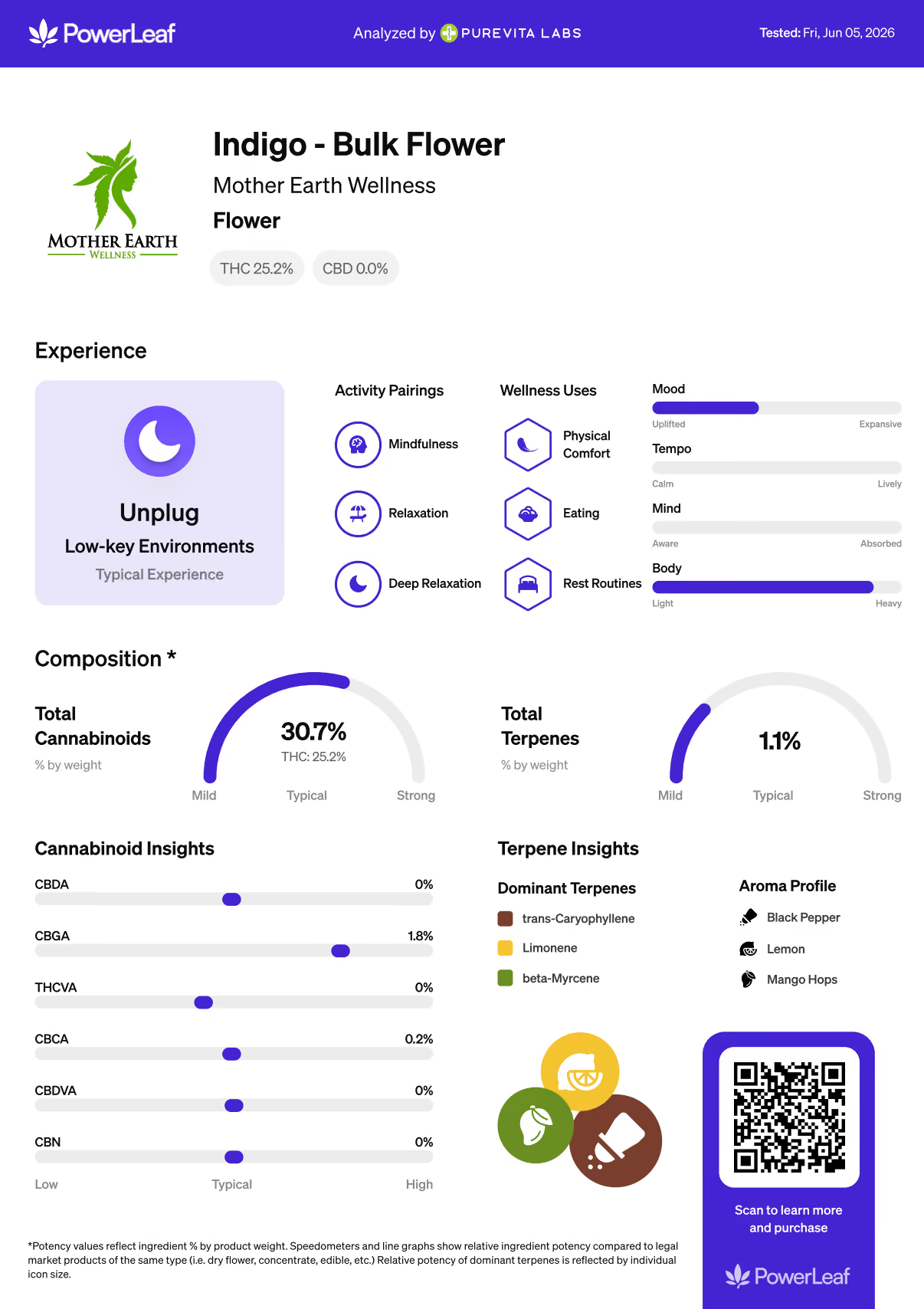
PowerLeaf product reports translate complex laboratory data into structured, easy-to-interpret product experience insights.

Instead of presenting ingredient information as a list of potency numbers, each report organizes the data into visual frameworks that show how individual ingredients within each product work together to shape the general tone of the overall product experience.

Raw Product Data

Percentages, lab values, and isolated data points.

1

Structured Interpretation

Data organized into consistent, interpretable frameworks.

2

Clear Validated Output

Clear, structured insights aligned with real-world context.

3

Explore the report

To see how each element adds to understanding the product.

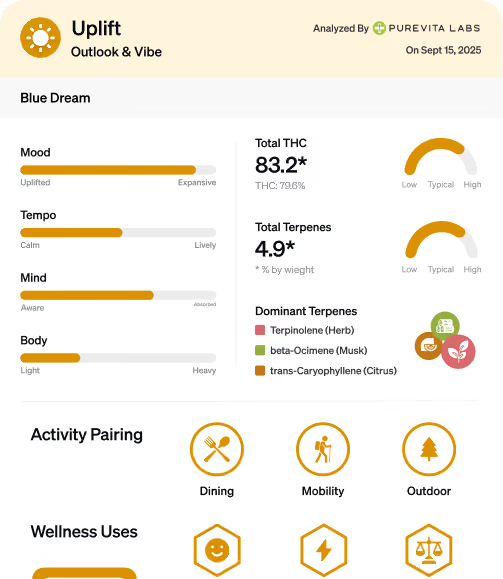
Mindset Category
Advanced analytics group products into 1 of 6 general mindset categories (UPLIFT, ENGAGE, INDULGE, RESET, UNWIND, UNPLUG) based on ingredient profile patterns and consumer-reported experiences to provide context and simplify product exploration.
LeafFX™ Scales
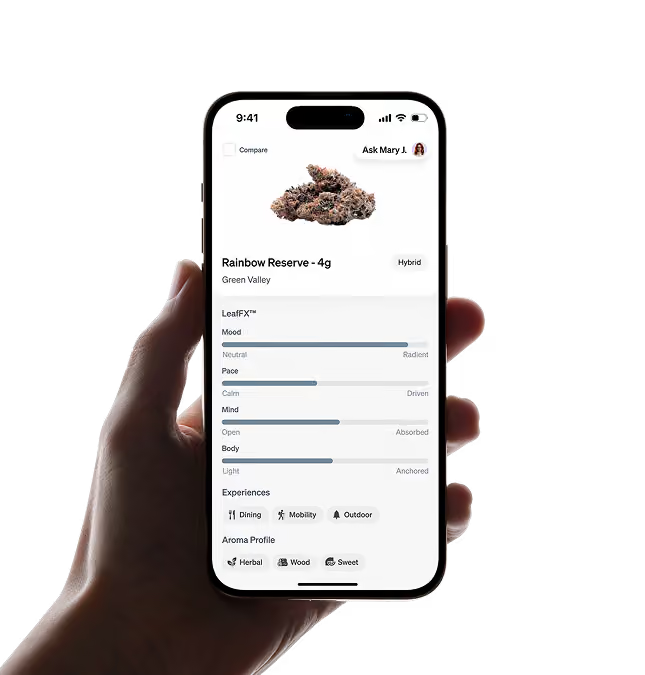
Scales use a standardized analysis to score product ingredient patterns across 4 core psychometric dimensions (MOOD, TEMPO, MIND, BODY), allowing consumers to directly compare products while shopping for their desired experience.
Cannabinoid Insights
Meters display individual cannabinoid potencies on intensity scales that are relevant to specific product type to allow for more detailed product exploration beyond total THC alone.
Testing Lab Certification
Confirms product lab certification, laboratory name, and testing date for safety, quality, and compliance with legal standards.
Activity and Lifestyle Contexts
Icons connect product profiles to common real-world usage contexts, based on ingredient patterns, science, and
consumer-reported experiences.
Potency Meters
Meters turn numbers into visual scales for "at-a-glance" understanding of the relative potencies of total cannabinoids, total THC, and total terpenes compared to other products in the market of the same type.
Terpenes Insights
Insights highlight dominant terpenes, their characteristic aromas, and their relative contribution to the product experience profile.

Cannabis isn’t associated with fatal overdose

but it’s not risk free.

Medication Interactions

Medication Interactions

Cannabis may interact with certain prescription medications by affecting how they are metabolized in the body. This can alter the effectiveness or side effect profile of either substance.

Mental Health Risk

Mental Health Risk

Frequent use of high-potency THC products has been associated with an increased risk of psychotic symptoms, particularly in individuals with a personal or family history of certain mental health conditions.

Smoking

Smoking

Combustion-based use, smoking exposes the lungs to irritants and byproducts similar to those found in tobacco smoke. Alternative methods that avoid combustion may reduce exposure to some of these compounds.

Dependence & Use Patterns

Dependence & Use Patterns

Regular use of high-THC products may lead to cannabis use disorder in some individuals. Increasing tolerance, difficulty reducing use, or continued use despite negative consequences may be indicators of problematic use.

Pregnancy & Breastfeeding

Pregnancy & Breastfeeding

Use of cannabis during pregnancy or breastfeeding may expose the developing fetus or infant to cannabinoids. Public health agencies advise avoiding use during these periods due to potential risks to development.

Youth Exposure

Youth Exposure

The brain continues to develop into early adulthood. Early and frequent cannabis use has been associated with potential impacts on cognitive function, attention, and behavioral development.

Consume Responsibly

Consume Responsibly
Start low, go slow
Cannabis can affect everyone differently.  Products come in different forms, and each form has a particular time to onset and duration of effect.  If you're a new consumer, or are trying a new type of product, start with a low dose (1/2 breath inhale, 2.5 - 5mg of edible) and wait to feel the extent of the effects for the right amount of time (5 mins for inhale, up to 2 hrs for edible) before you decide to dose a little more.
Avoid illicit or synthetic products
Products obtained outside of regulated cannabis programs may not be subject to standardized testing for potency, contaminants, or ingredient transparency.

Some hemp-derived THC products are sold under different regulatory frameworks that may not require the same level of oversight. Similarly, products from non-specialty retail or online sources may not consistently require verified lab data.
Regulated cannabis products are typically tested to provide greater transparency into ingredient composition and potential contaminants.
Take tolerance breaks
Requiring higher doses to feel the same effect from a product over time is a sign of increasing tolerance to THC, and can progress to dependence or addiction. Try to make it a point to take time off from consuming every so often, unless you rely on cannabis medicinally.
Choose balanced THC:CBD ratios
High potency products can lead to over-consumption, and cause side effects like 'the jitters' or paranoia.  One out of every 6 people has genetics that can make them very sensitive to THC, even at very low doses.  Science has shown that consuming fixed-ratio products with CBD in at least a 1:1 or 2:1 ratio to THC can smooth out that experience.

Know What’s Inside.
Understand What It Means.

PowerLeaf organizes lab-tested data into a clear,
consistent framework for easier interpretation.